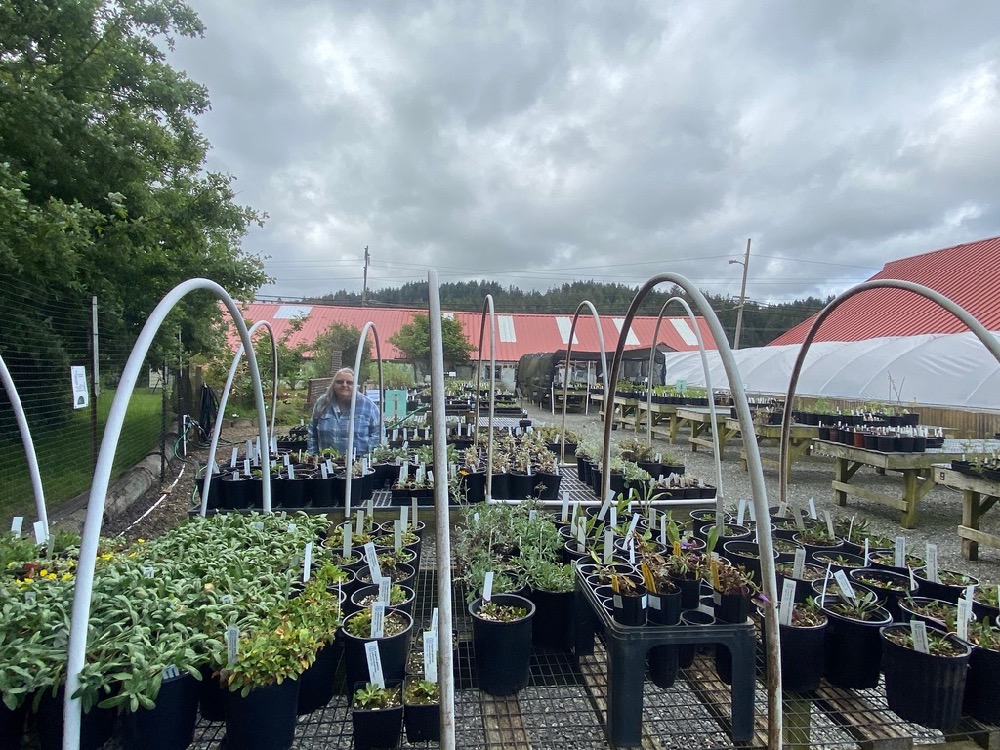
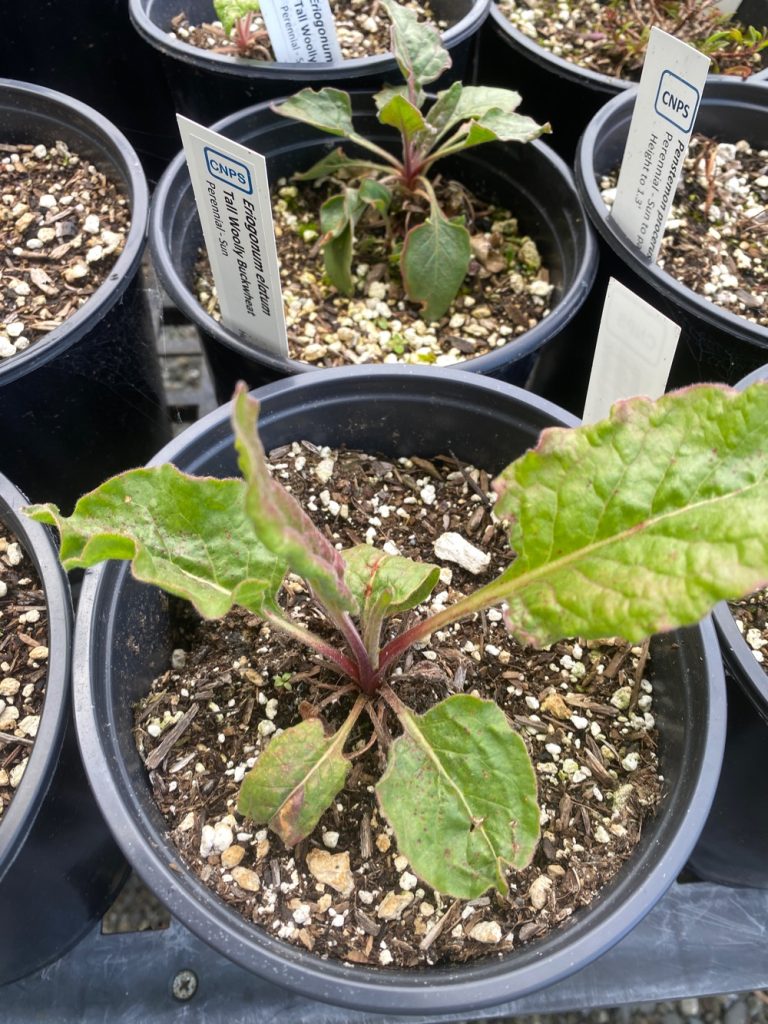
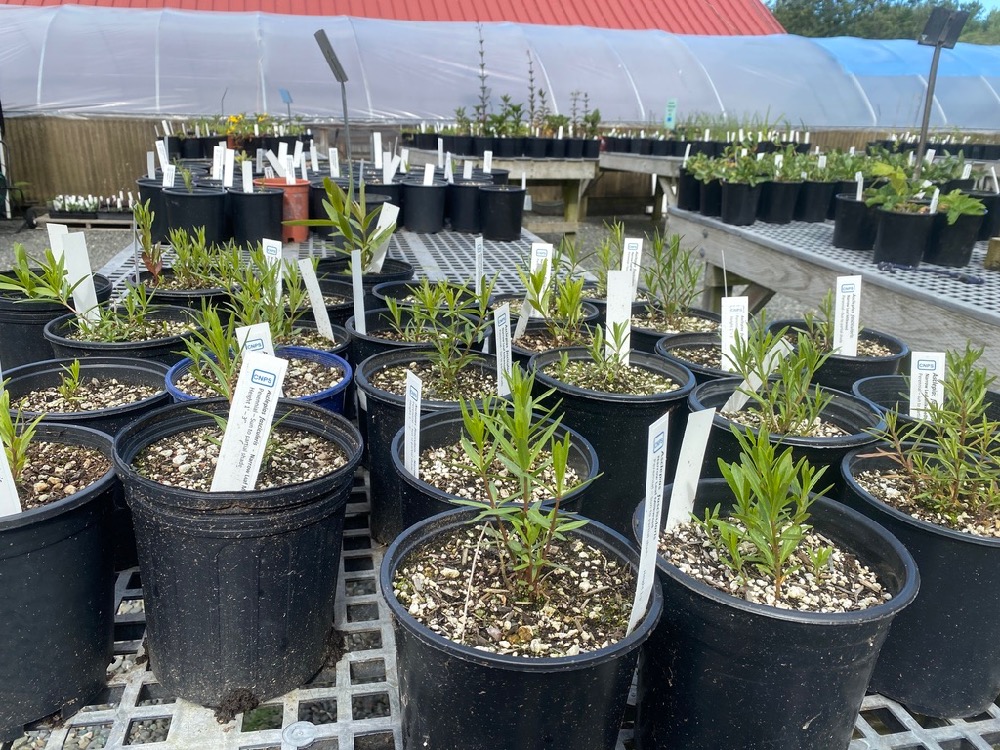
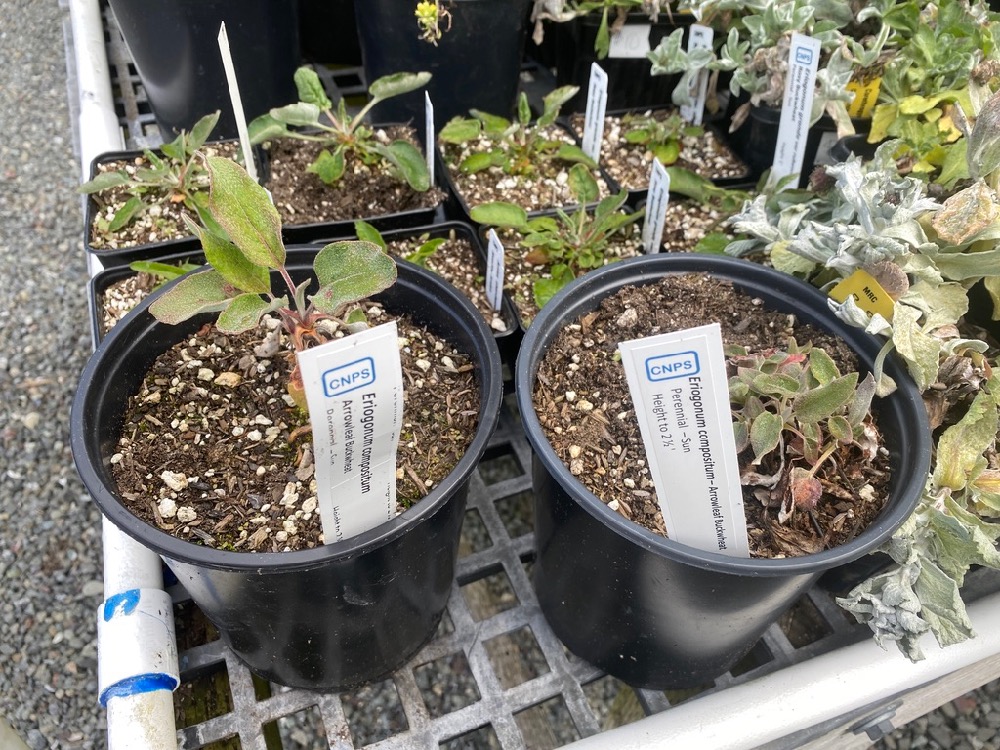
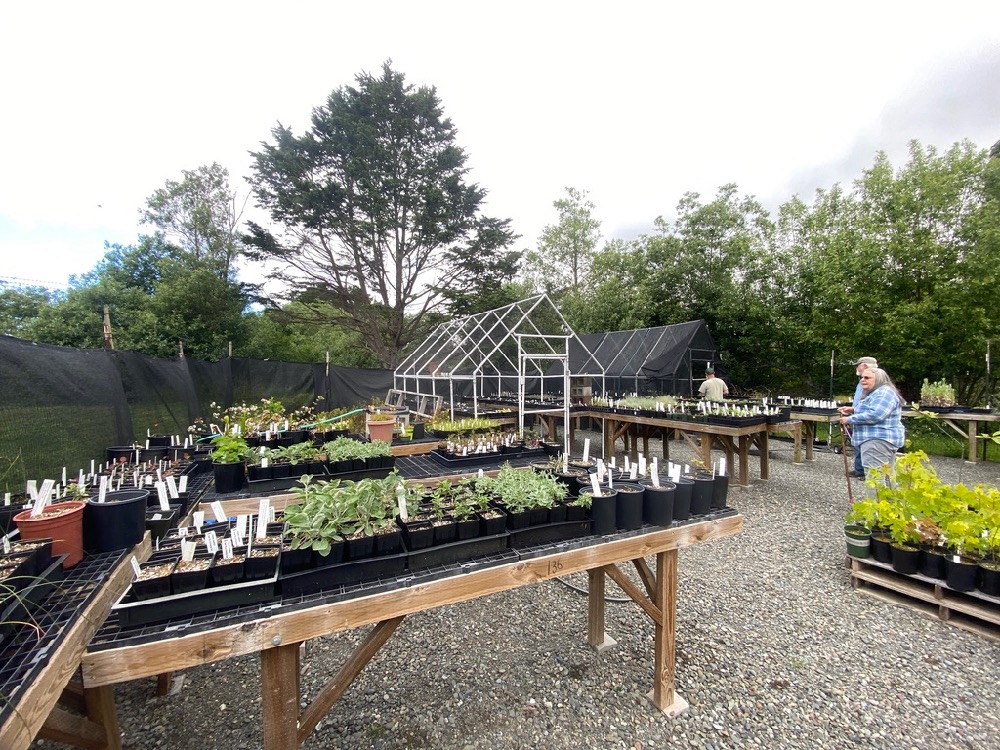
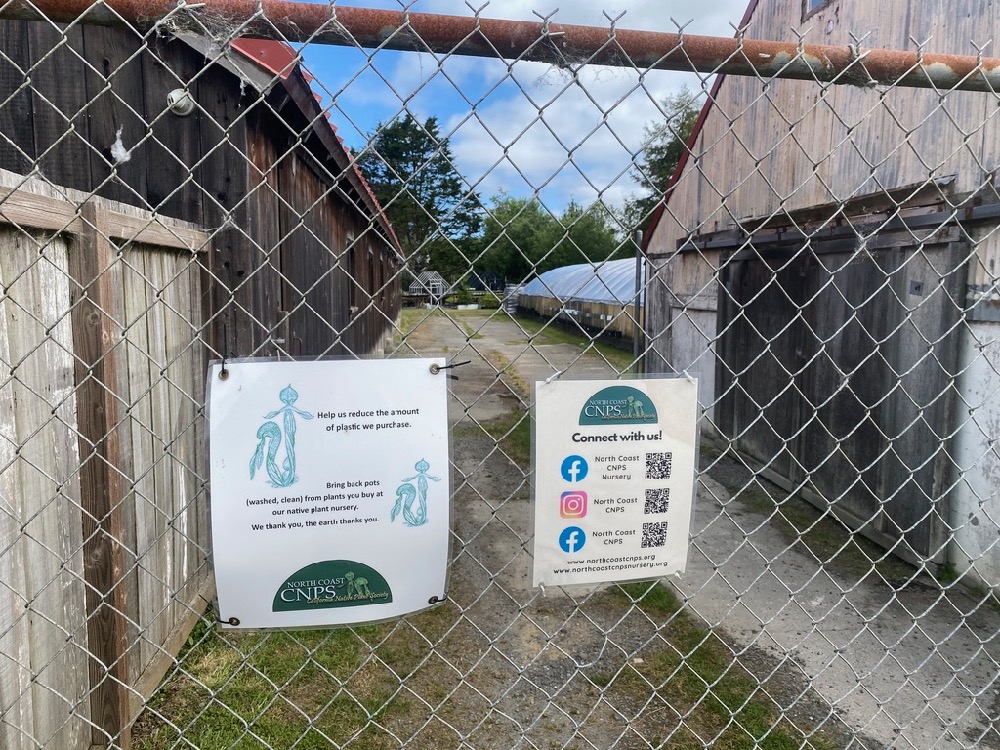
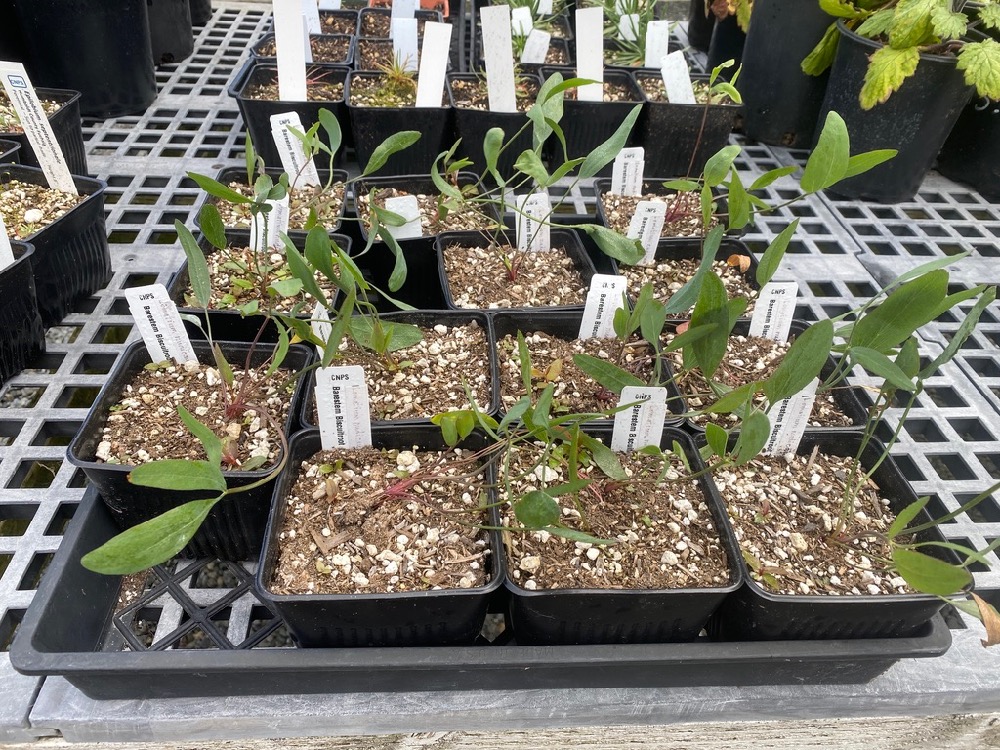
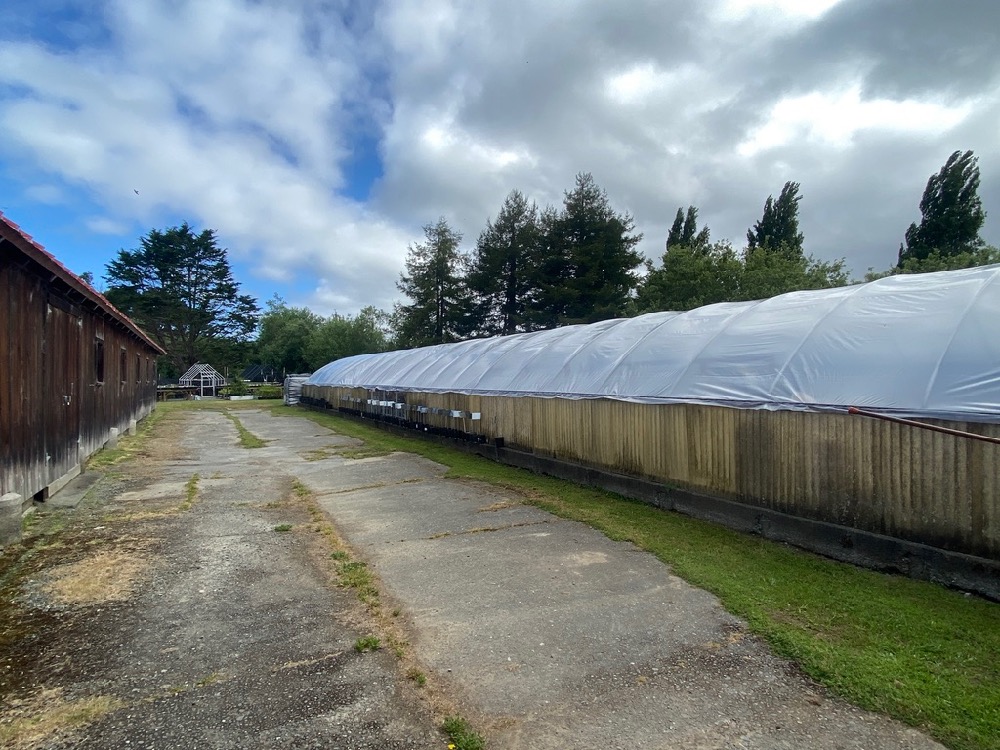
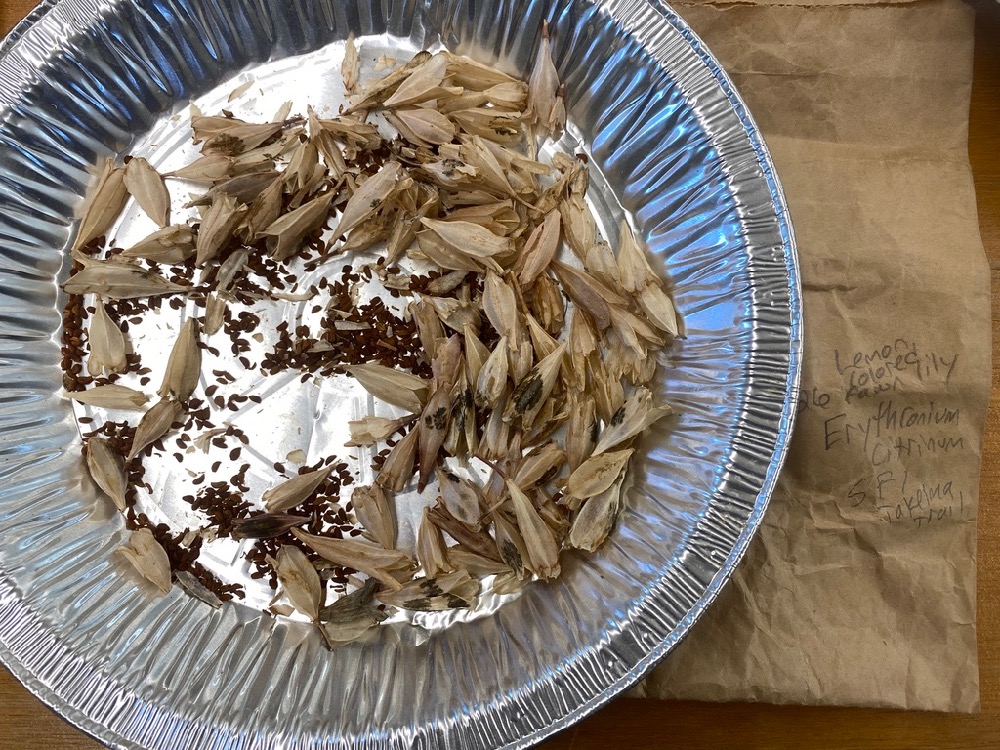
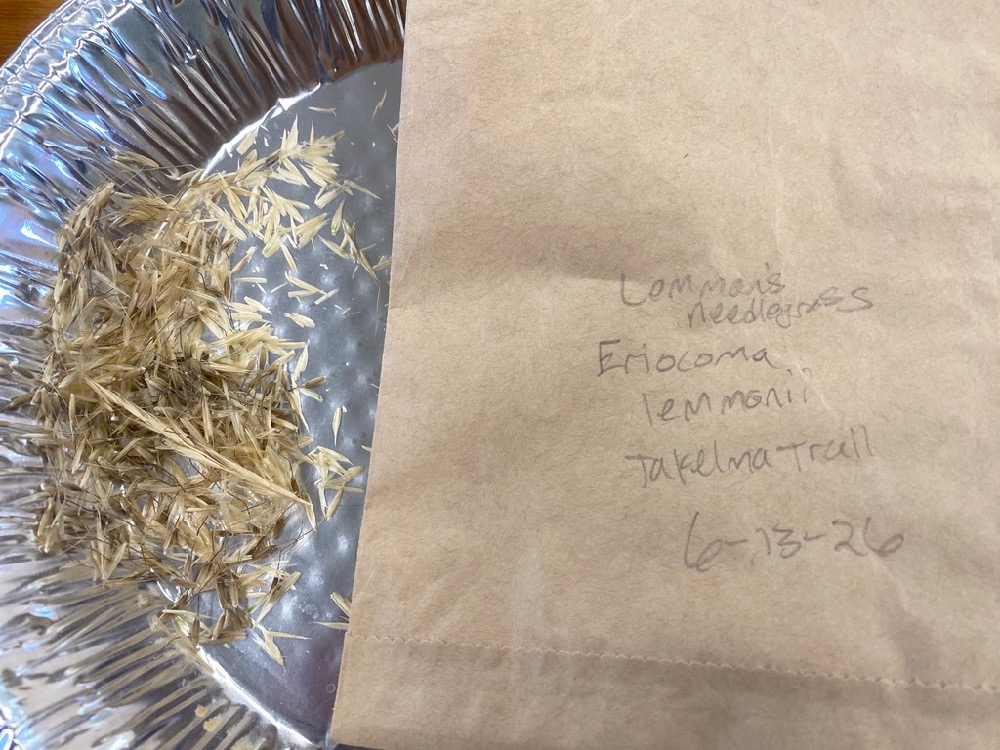
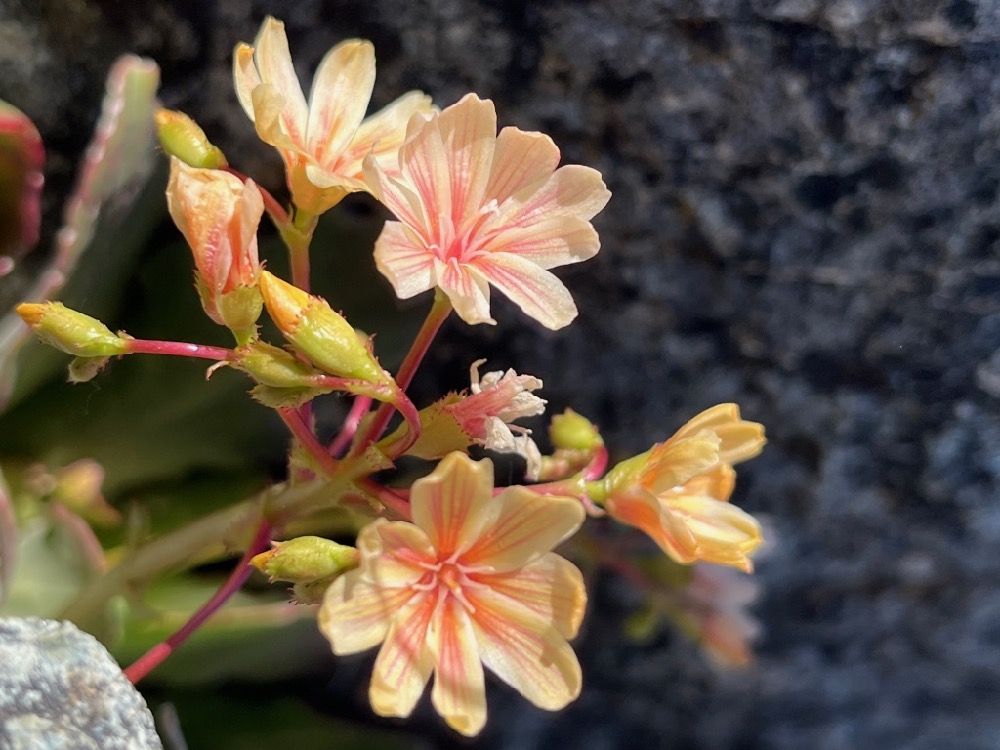
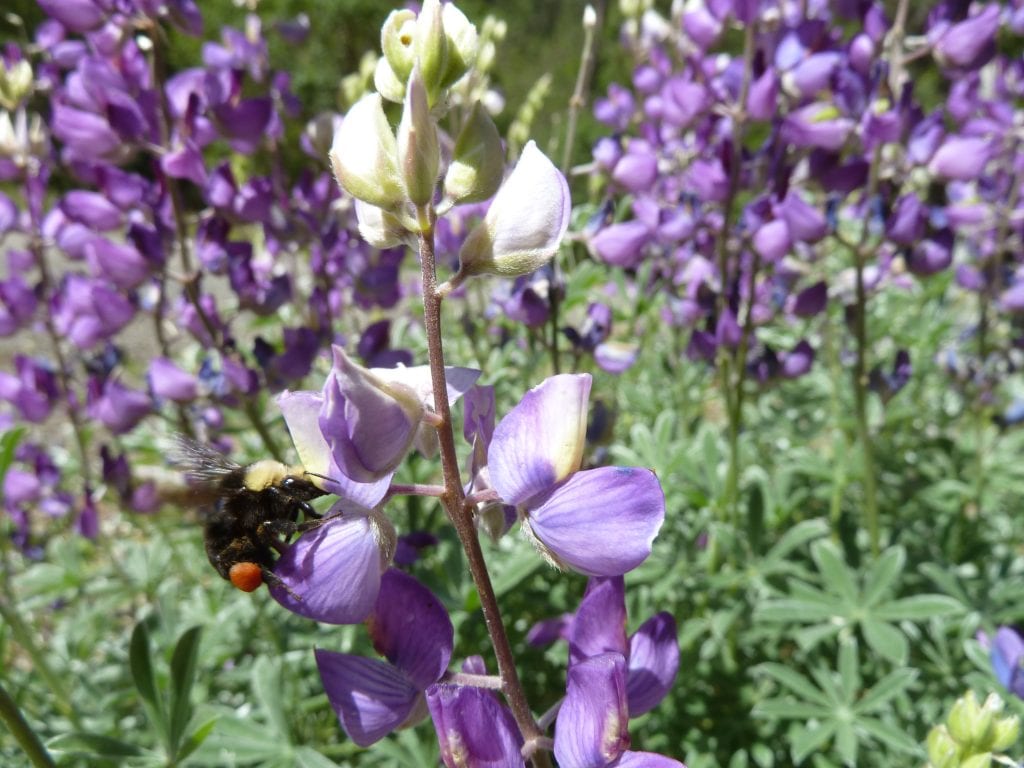
Thanks to nursery volunteer Chris Beresford for the nursery tour and her commitment to native plant gardening and conservation!
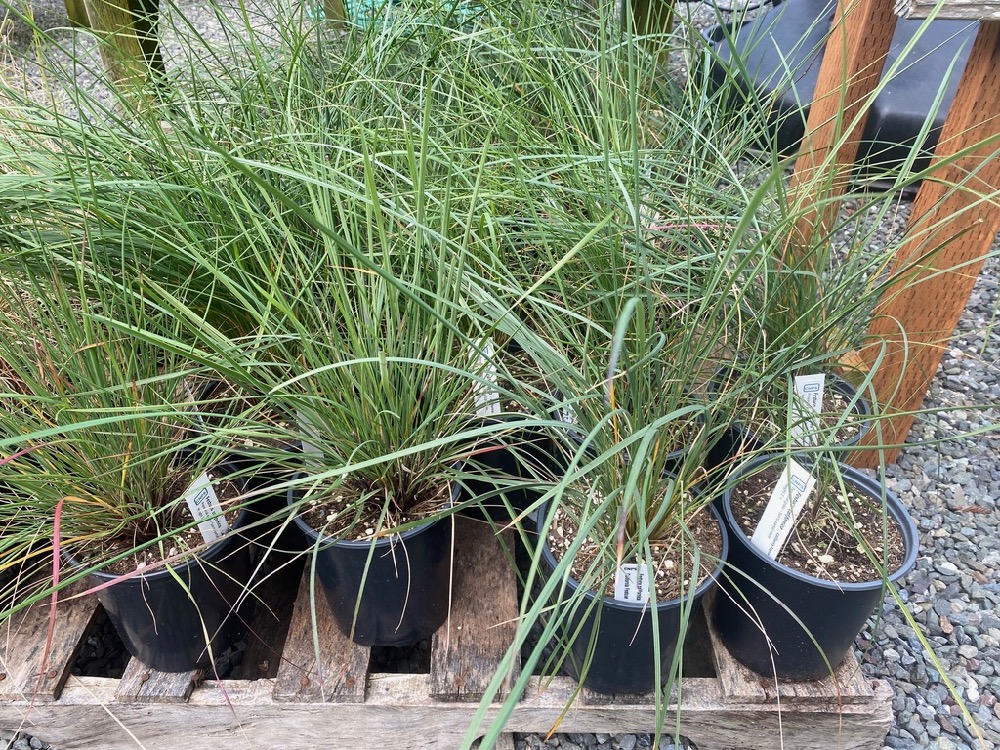
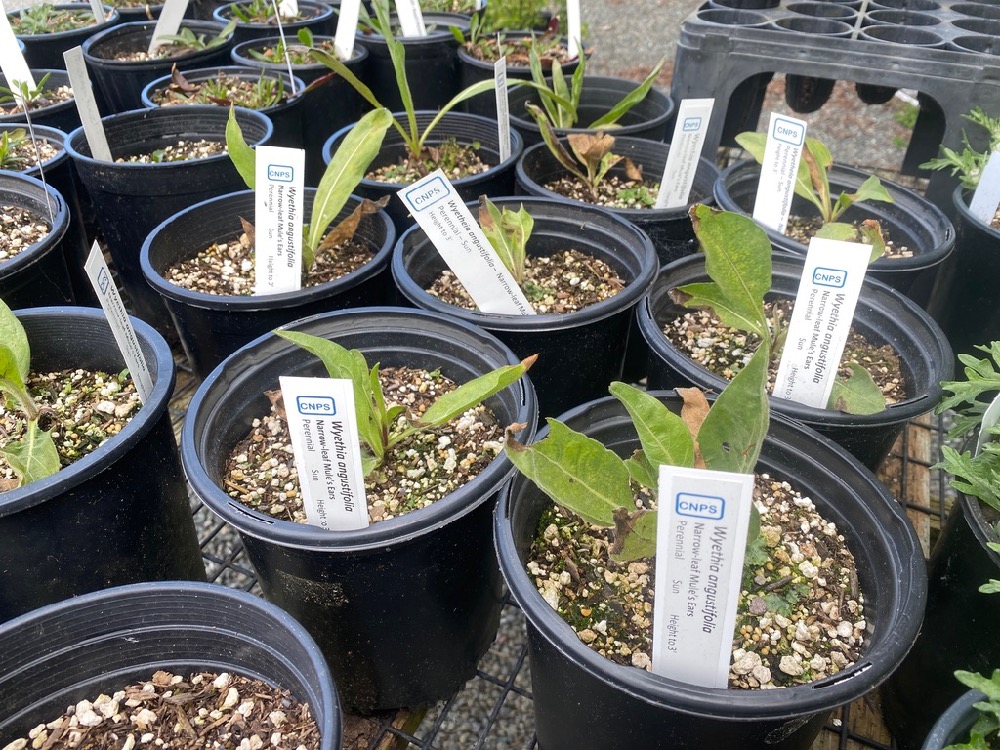
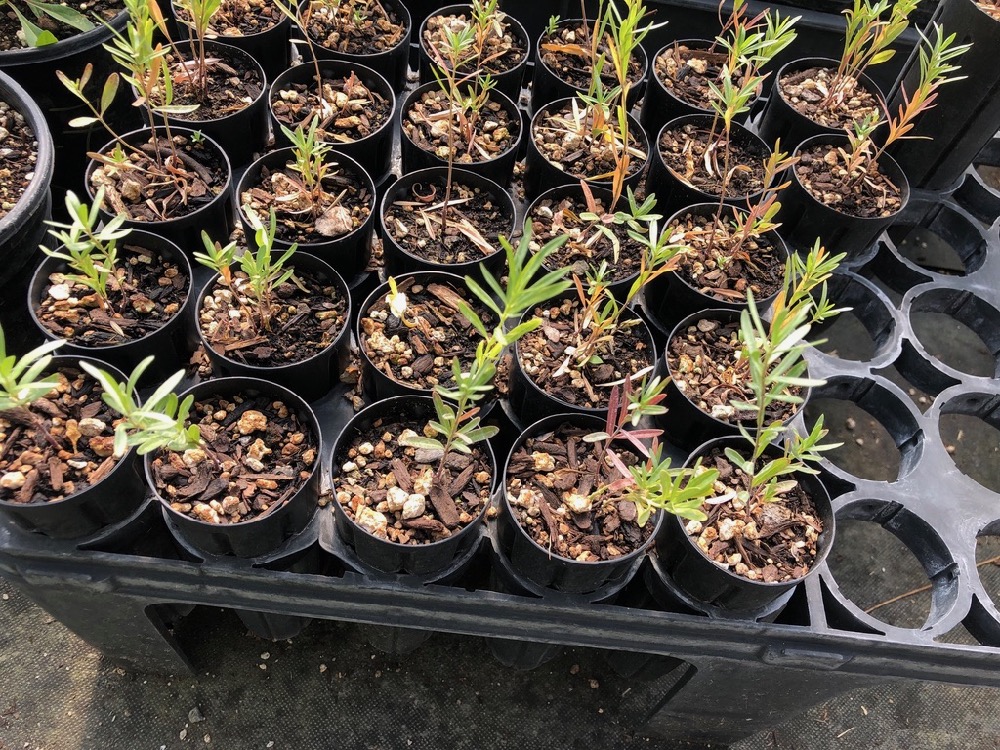
This summer we visited the North Coast Chapter CNPS Native Plant Nursery located at the Freshwaster Farms Reserve in Eureka, California. This fully volunteer-run nursery grows over 100 species of Pacific Northwest and California native plants. The nursery has been in operation since 2015, and they use seeds from us at Klamath-Siskiyou Native Seeds for many of the species they grow each year.
Support the North Coast Chapter CNPS Native Plant Nursery! You can buy plants from them year-round during their open hours, and at their highly popular spring and fall plant sales. They have a great selection of species, all grown with loving care with nursery volunteers who care greatly about native plants.
Nurseries like this are hugely important in helping people grow more native plants for the benefit of pollinators and wildlife. They are a great educational resource for native plant growers and native plant conservation.
Here at Klamath-Siskiyou Native Seeds, we love to know that our seeds are helping this important work, and helping great organizations like the North Coast Chapter CNPS! And we always enjoy seeing the plants people grow from our seeds, and the successful establishment of lots of beautiful native plants!
Thank you North Coast Chapter CNPS Nursery volunteers!
We participated in lots of amazing events this summer, said hello to many incredible native plants in the wild, and collected a ton of seeds!
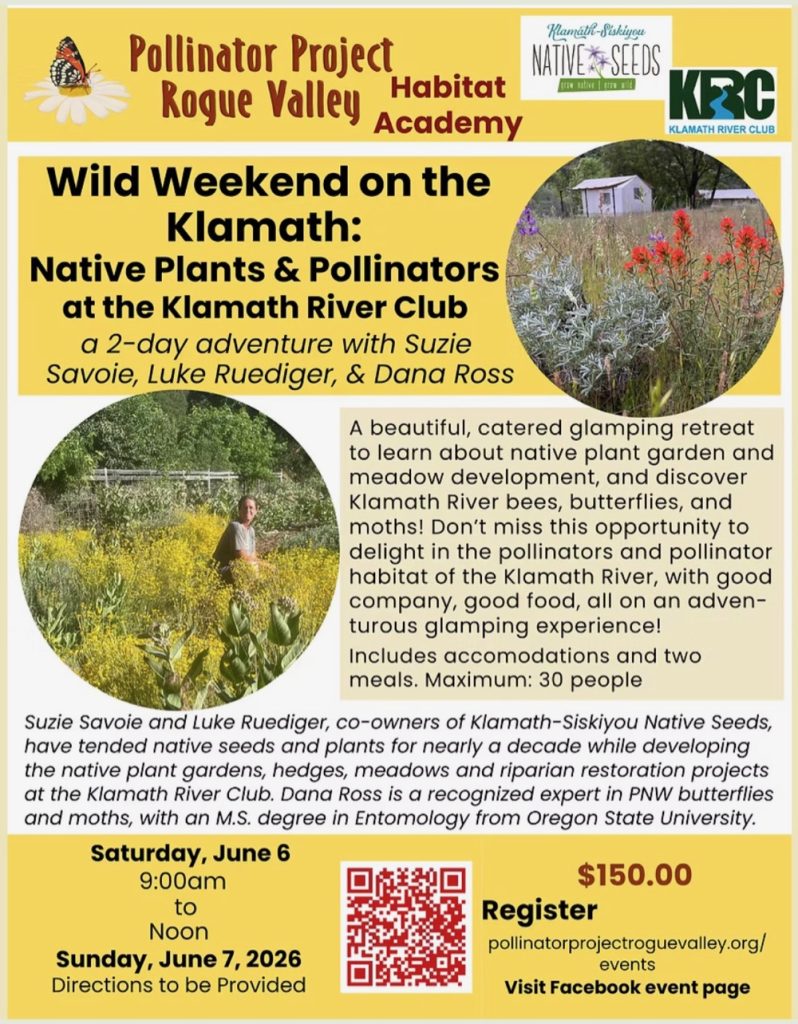
Wild Weekend on the Klamath: Native Plants & Pollinators at Klamath River Club
Klamath River, CaliforniaJune 6-7, 2026
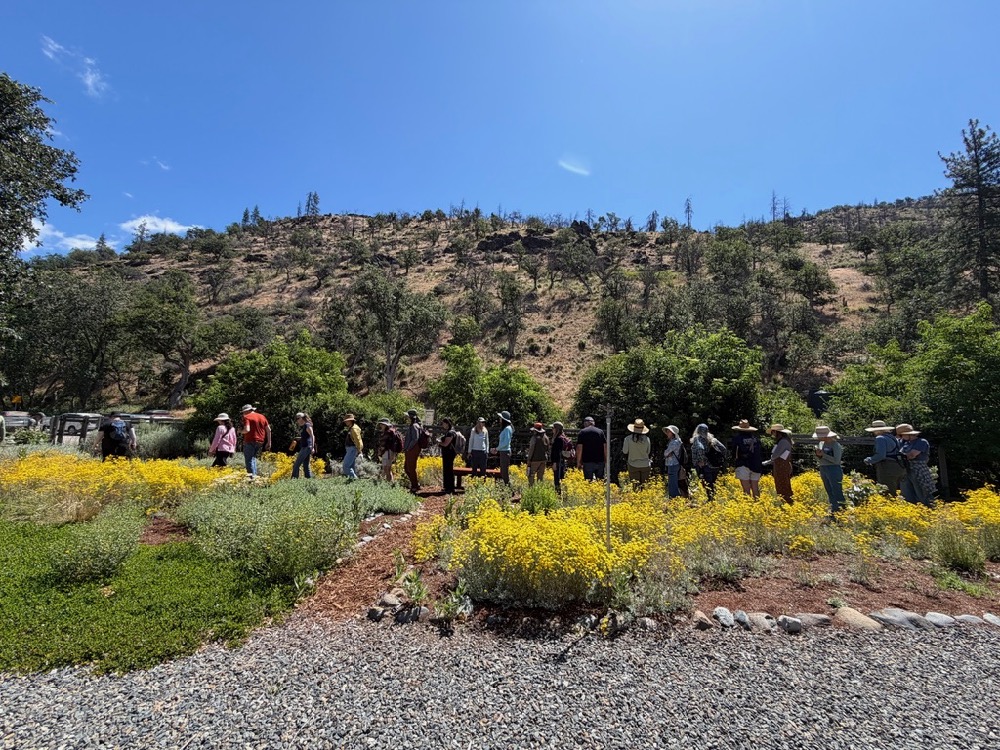
At the beginning of June we hosted a workshop with Pollinator Project Rogue Valley at Klamath River Club. It was a beautiful, catered glamping retreat along the mighty Klamath River and an opportunity for folks to learn about native plant garden and meadow establishment with Suzie Savoie and Luke Ruediger from Klamath-Siskiyou Native Seeds!
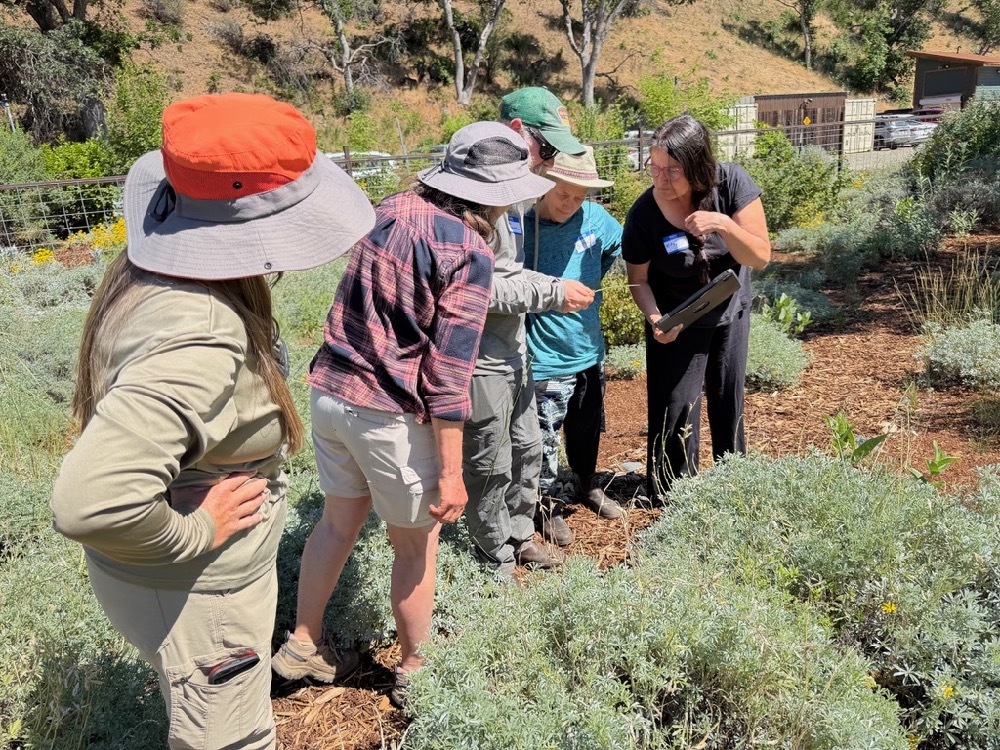
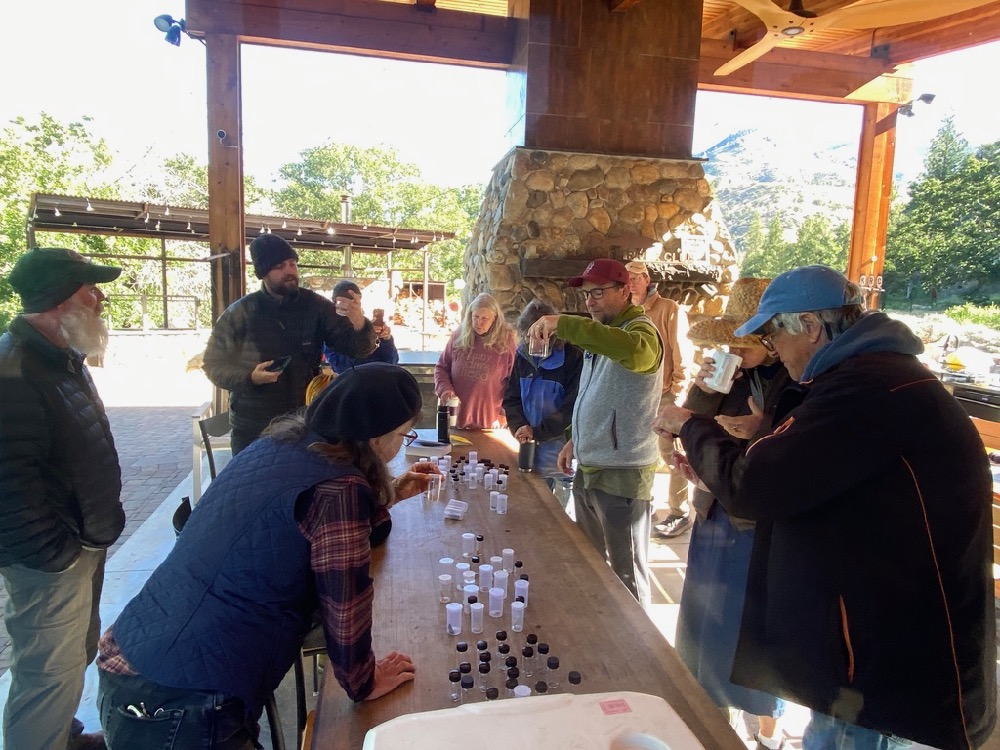
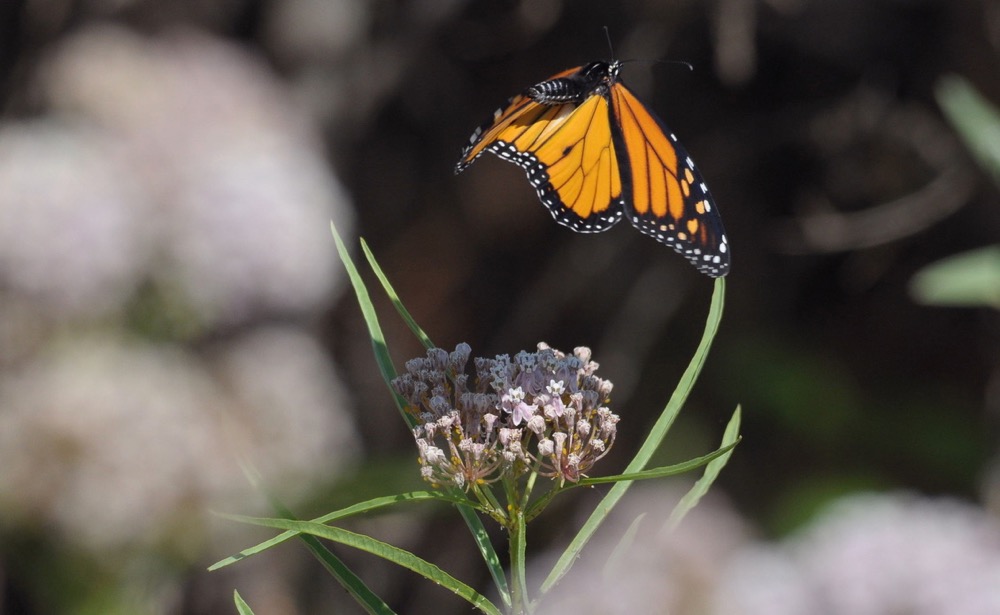
By day we toured the native plant gardens, hedgerows, seeded meadows, and riparian restoration areas. In the evening we enjoyed presentations by Tom Counts of Klamath River Club about the Klamath Dam removal project, Mitzi Wickman about the work of the Mid-Klamath Watershed Council and their use of seeds from these native plant gardens, Kristina Lefever about Pollinator Project Rogue Valley, and lepidopterist Dana Ross, about moths and the Siskiyou Crest Moth Project. We then held a moth night with Dana, and in the morning, after a night of glamping on cots in the cozy canvas tents or regular pop-up tents, we had a wonderful breakfast, shared more about the moths we saw the night before, and had an impromptu native grass identification session in the gardens. It was such a joyful, fun event of learning and exploration, and we were graced by the presence of a couple of monarch butterflies!
We talked about establishing, weeding, watering and long-term care and expectations of the native plant gardens, as well as appropriate species selection and more.
We looked at the riparian restoration work and native plantings along the Klamath River, and discussed the impacts of the McKinney Fire on the native plantings and on the property as a whole, and the fire resiliency the native plantings provided during the wildfire.
We enjoyed superb catered food by Chef Ryan. Yum!
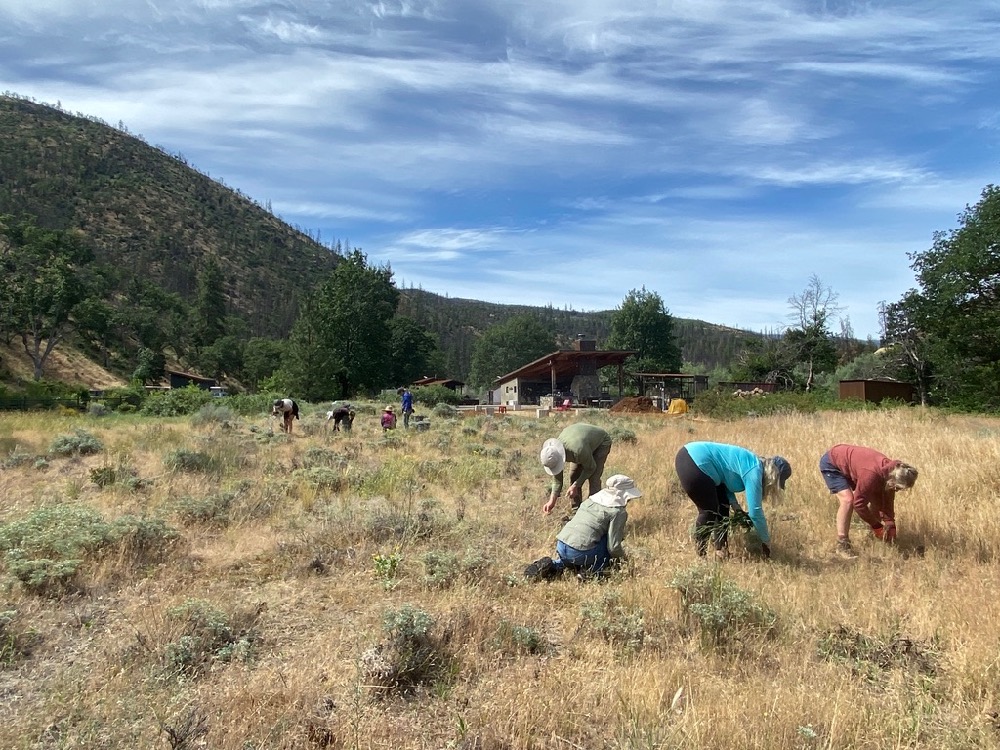
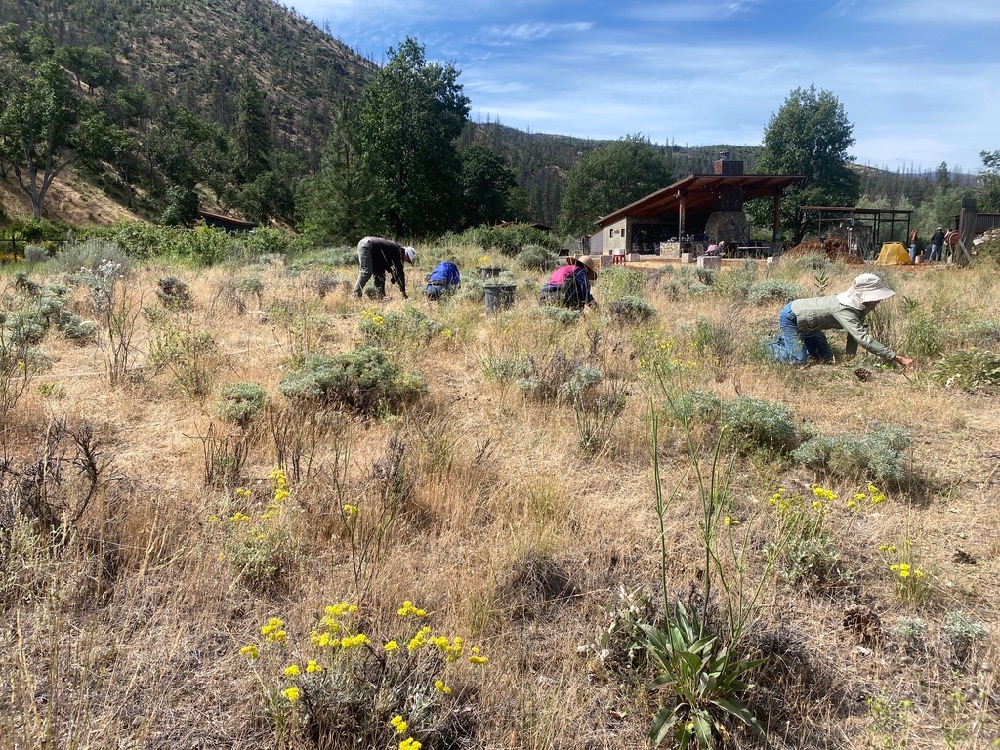
We discussed native plant and invasive plant identification and weeded in the gardens and the seeded meadow habitat to remove invasive and non-native plants.
Lepidopterist Dana Ross, from the Siskiyou Crest Moth Project, gave a fantastic presentation about moths, and then led a moth night. There were so many incredible moth species, and it was so interesting to learn about what native plants they use, including the Achemon sphinx moth (Eumorpha achemon) (on the right in the photo) that uses native California wild grape (Vitis californica) as a larval host plant! There’s lots of wild grape at Klamath River Club.
Thanks to Pollinator Project Rogue Valley and Klamath River Club for helping to host this workshop, and Dana Ross for his expertise!
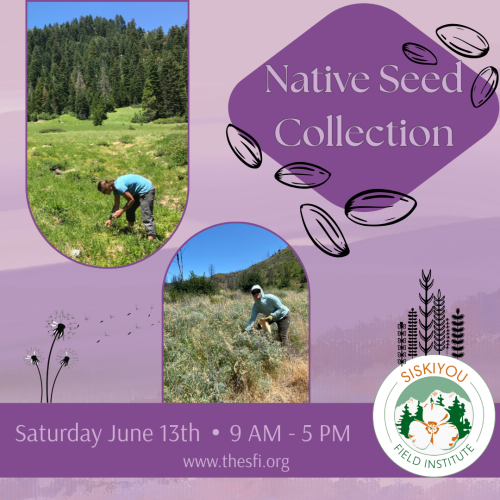
Native Seed Collection Workshop at Siskiyou Field Institute
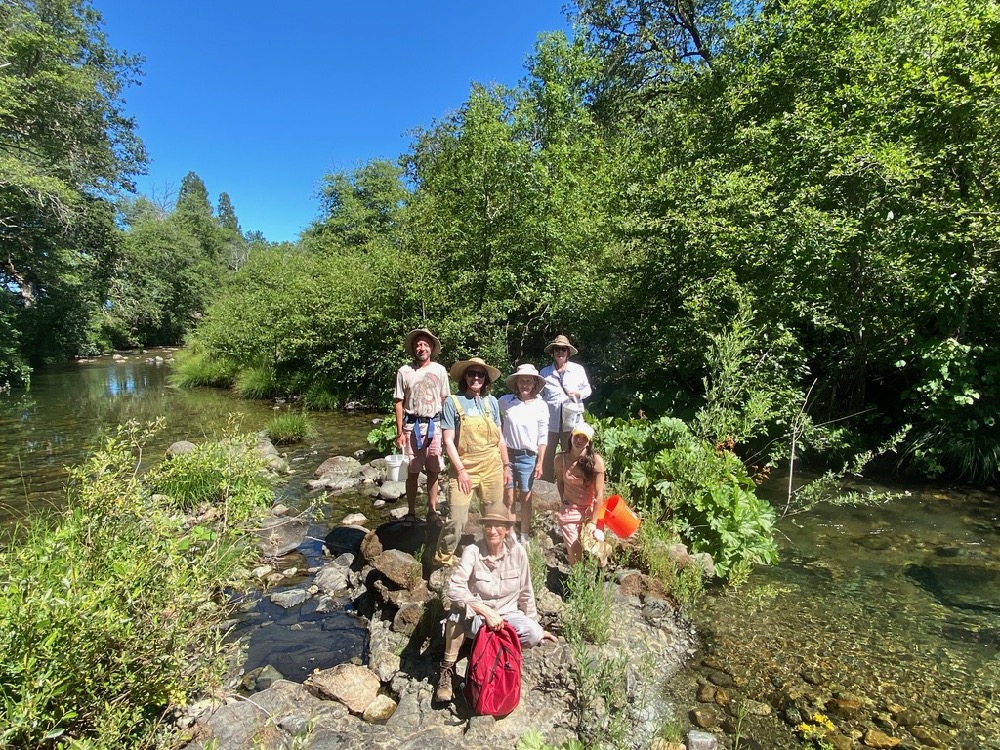
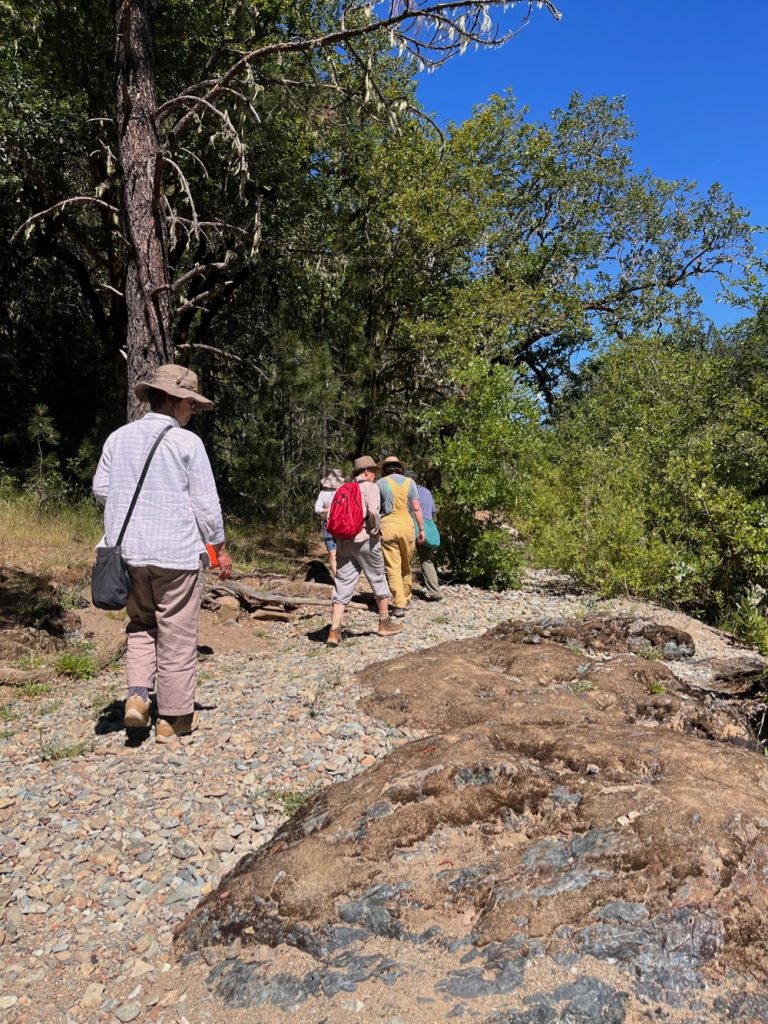
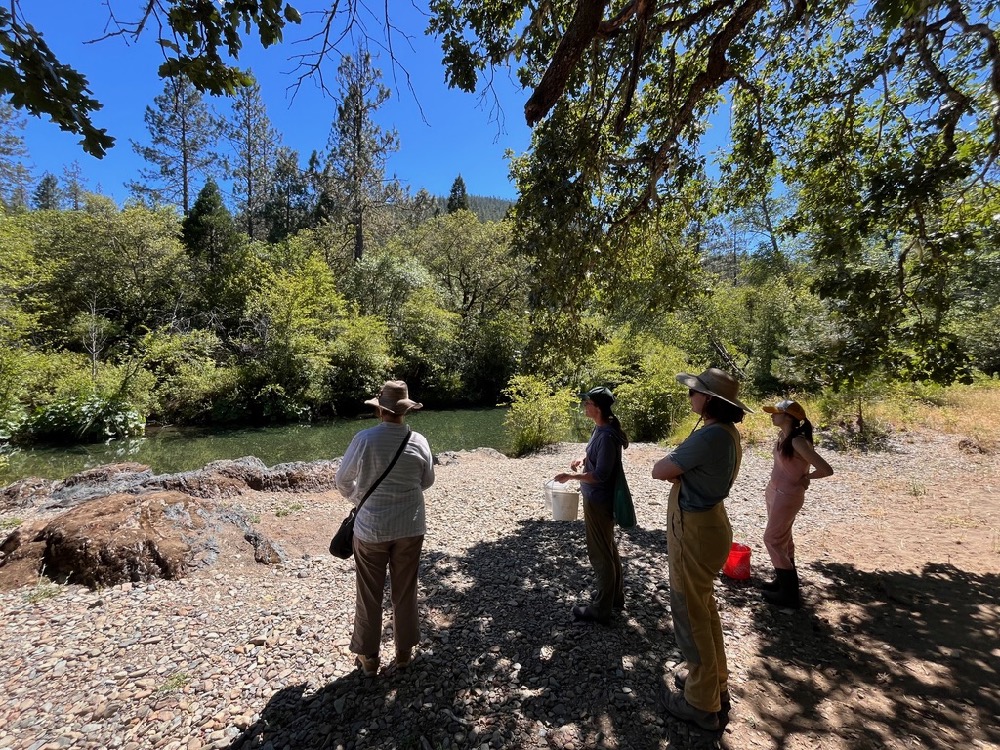
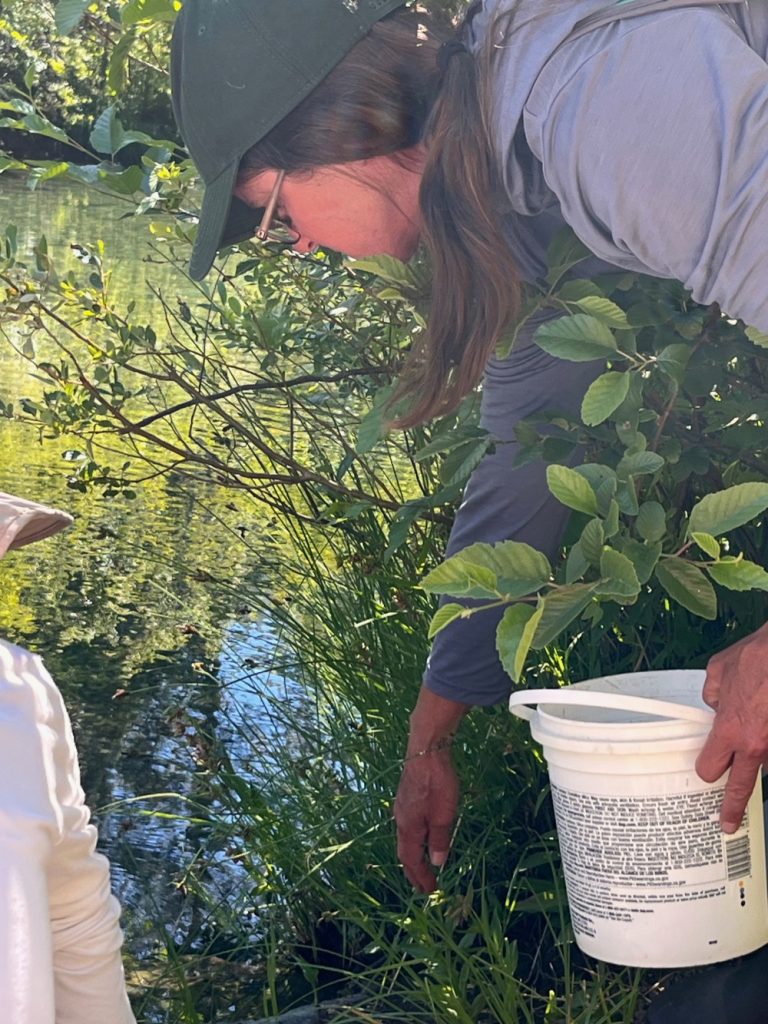
Native Seed Collection workshop participants along Deer Creek.
Deer Creek Center – Selma, OR – June 13, 2026
In mid-June Suzie Savoie from Klamath-Siskiyou Native Seeds led a native seed collection workshop hosted by Siskiyou Field Institute at their Deer Creek Center in Selma, Oregon.
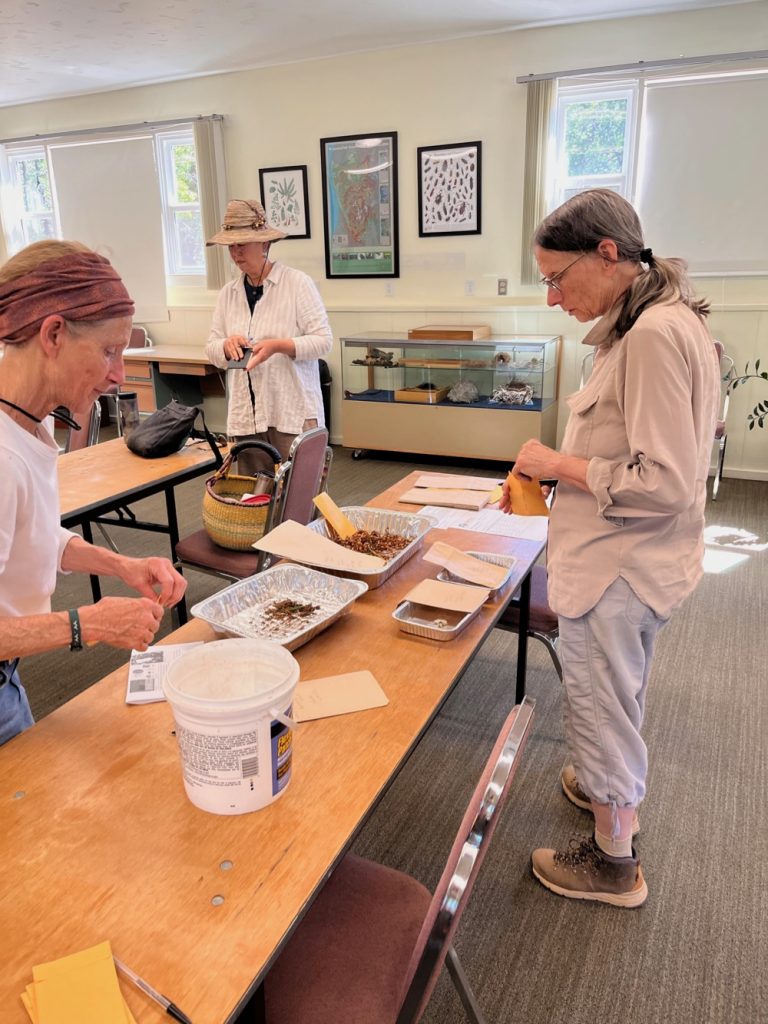
Course participants helped collect seeds from 22 different species, and looked at many more species that had either dropped their seeds already, or the seeds weren’t ripe enough to be collected yet. Participants took a little bit of seed home with them, but we left the bulk of the seeds for Siskiyou Field Institute to use in their habitat restoration projects on site.
The course covered the ethics and legal considerations of native seed collection, identifying plants when they are producing seeds, seed collection tools and techniques, seed collection timing, as well as how to use and apply native seeds in gardens, habitat restoration, pollinator projects, native seed farming, and more!
We also took part in Oregon Pollinator Conservation Day at OSU Extension in Central Point on August 15th, which was an amazing event sponsored by lots of great organizations and businesses that had excellent speakers. Suzie gave a presentation at this event: Grow Native Plants for Pollinators from Seed.
We have spent many, many days out in all weather conditions collecting seeds from dozens of different species of native plants this year. Seed packet sales are already picking up in anticipation of fall seed sowing, and it looks to be a very busy fall ahead!
Wild Weekend on the Klamath: Native Plants & Pollinators at the Klamath River Club June 6-7
Join us in enjoying a beautiful, catered glamping retreat along the mighty Klamath River while learning about native plant garden and meadow development with Suzie Savoie and Luke Ruediger from Klamath-Siskiyou Native Seeds! Discover Klamath River bees, butterflies, and moths with lepidopterist Dana Ross, who will provide identification by day, followed by an evening presentation, and then moth sampling at night. This workshop is an opportunity to delight in the pollinators and pollinator habitat along the Klamath River with good company, good food, and an adventurous glamping experience.
Klamath River Club is a private fishing retreat that has developed into a pollinator paradise after nearly a decade of native planting, seeding, riparian restoration, meadow enhancement, and invasive plant management.
Suzie Savoie and Luke Ruediger are co-owners of Klamath-Siskiyou Native Seeds, which provides locally sourced, wild-collected native seeds from northwest California and southwest Oregon. They’ve brought their lifelong study of the botany and ecology of the region into the project’s design, development and maintenance, creating an ecologically significant, pollinator-friendly, landscaped habitat along the Klamath River. They have tended native seeds and plants for nearly a decade while developing the native plant gardens, hedges, meadows and riparian restoration projects at the Klamath River Club.
Native Seed Collection Workshop withSuzie Savoie at Siskiyou Field Institute June 13th
Learn how to collect native plant seeds and apply them to habitat restoration, pollinator support, and native gardening in this hands-on workshop with Suzie Savoie, co-owner of Klamath-Siskiyou Native Seeds. The course covers ethics and legal considerations of seed collection, including differences between personal and commercial use and collecting on private versus public land. Participants will head into the field to practice identifying native plants, timing seed collection, and using proper tools and techniques. Instruction highlights the importance of elevation belts and how seeds adapted to specific elevations best support restoration and landscaping.
Seed collection sites have been scouted and flagged along the Takelma Creek Trail, along Deer Creek, and in serpentine uplands! This unique seed collection course will feature serpentine adapted plant species!
What native plants should I grow? We get more requests looking for advice about recommended native species than we have time to answer, unfortunately, so we have created a simple guide to online tools in California and Oregon to help you figure out the best native species for your home, property, or land that you manage, and come up with your own native species list for your area!
Click on the blue link below to view the document, or the download button to download the document.
It is the same document as you see in the featured image above, but with live hyperlinks that take you directly to the linked web pages.
Use the “What Grows Here” function on the Calflora website to create a species list for your area. You can access that webpage here.
Use the +/- on the map to zoom in as close as you can to your house or property. Then click the SEARCH button at the top. It will populate a list of plants organized by plant type. Click on the + button next to each plant type to see the full list of the species that have been documented to grow in your area. You will see if it is native or non-native, and you can click on each species to learn more about it or view more photos.
This populates species that have been documented to grow in that area. There may be more plants native to the area that have not been documented.
Zoom in on the map close to your target area. From there, click on either the polygon, circle or rectangle icons on the upper, right-hand side of the map. Click and drag the shape until it captures the general area. Hit the green SEARCH button on the upper left-hand side of the map. A notice may pop up that you don’t have permission to see exact locations of rare species that may be in that area. Click OK if you see that pop-up (rare plants are not included on the map).
All “Records” will then be populated. Click on the TAXA tab to view a simple species list that includes all vascular species that have been documented to occur in that area. There may be more plants native to the area that have not been documented.
Enter coupon code: KSNSholidaysale2025 at checkout to receive 10% off native seed packets on orders $30 and up.
SHOP NOW! This offer is available now through December 1, 2025!
Photo: California greenbriar (Smilax californica) berries. Seed packets coming soon!
We are thankful to all our loyal customers and all the kindred spirits that share our love of native plants! To show our gratitude we are bringing back our highly popular holiday sale. Thank you, and thanks to everyone who grows native plants and works to protect intact native plant communities!
Black Friday and Cyber Monday are some of the biggest shopping days of the year. The celebration of consumerism results in a huge environmental impact, as most of the “bargain” products are created in ways that harm the environment, and most will eventually end up in the landfill. Whether you boycott Black Friday and Cyber Monday altogether, or commit to purchasing from only reputable sustainable or eco-friendly businesses, there are ways protect the environment and lessen the impacts to our climate during the holiday gift giving season.
In order to promote an alternative to plastic, electronic, or other unsustainable holiday gifts, we are offering a 10% discount (Enter Coupon Code: KSNSholidaysale2025 at checkout) on all our native seed packets for orders $30 and up, from now through December 1st. And on Giving Tuesday we encourage you to donate to your local, grassroots non-profit working to protect native ecosystems.
Happy Holidays from KSNS!
Suzie and Luke cleaning seeds in the seed cleaning barn, using our Dybvig seed cleaning machine and antique Clipper seed cleaning machine.
Red elderberry is known for it’s knockout, flashy red berries in late summer to early fall. It is an eye-catching shrub that has long been grown as an ornamental plant in native plant and wildlife gardens. Although the red berries steal the show, the white to cream colored flowers are fragrant and highly attractive to various pollinators, including hoverflies, hummingbirds and butterflies.
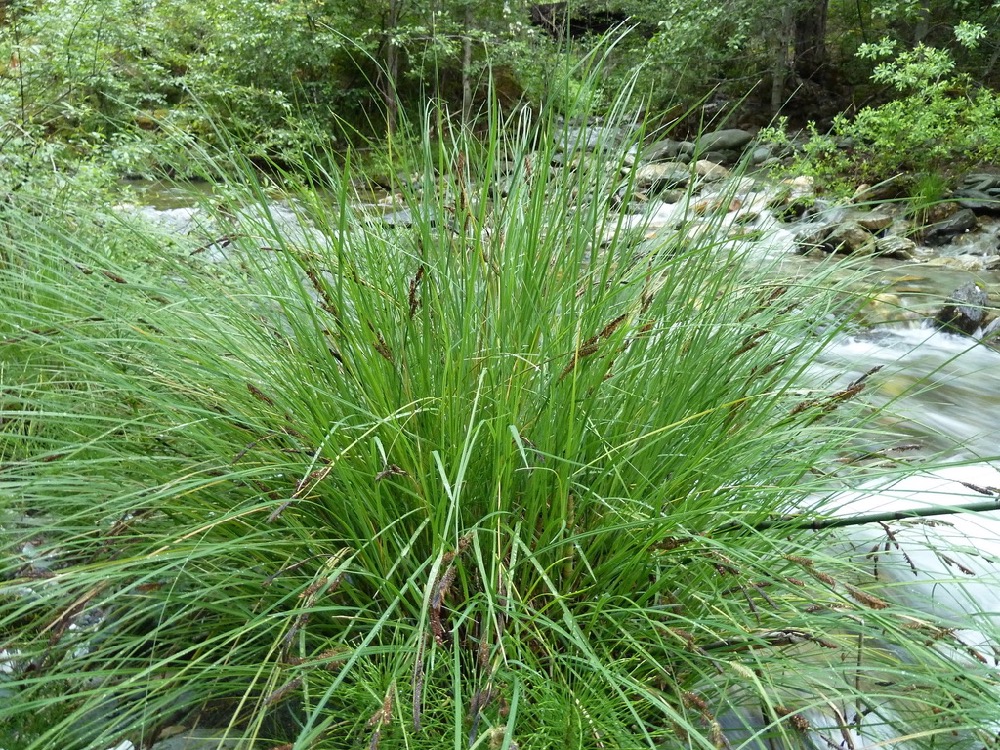
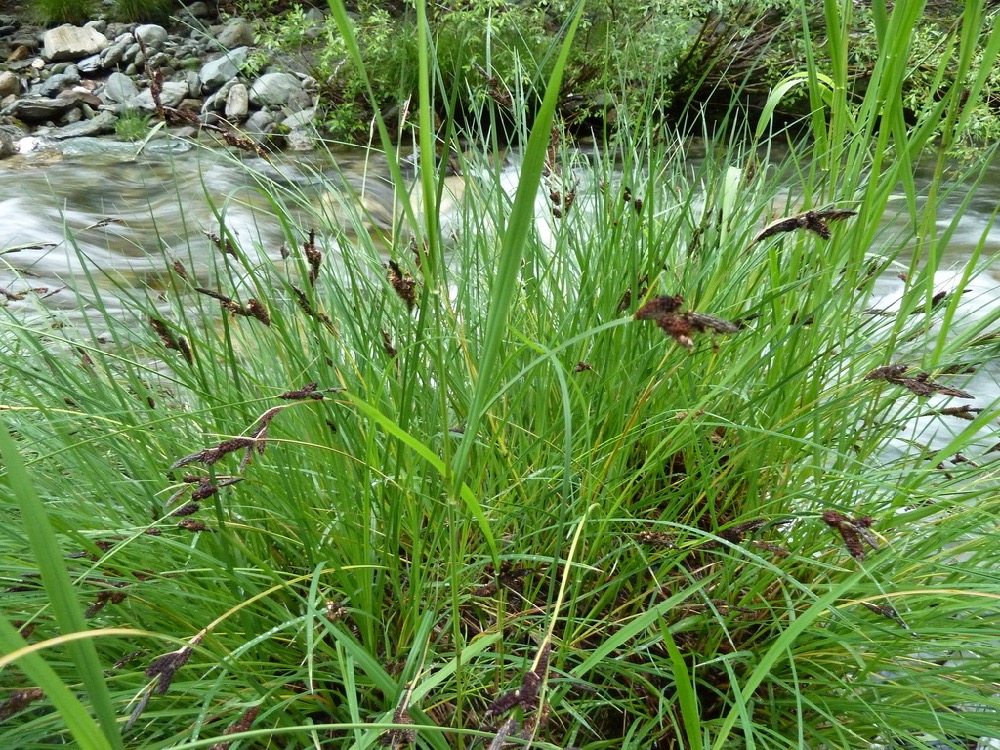
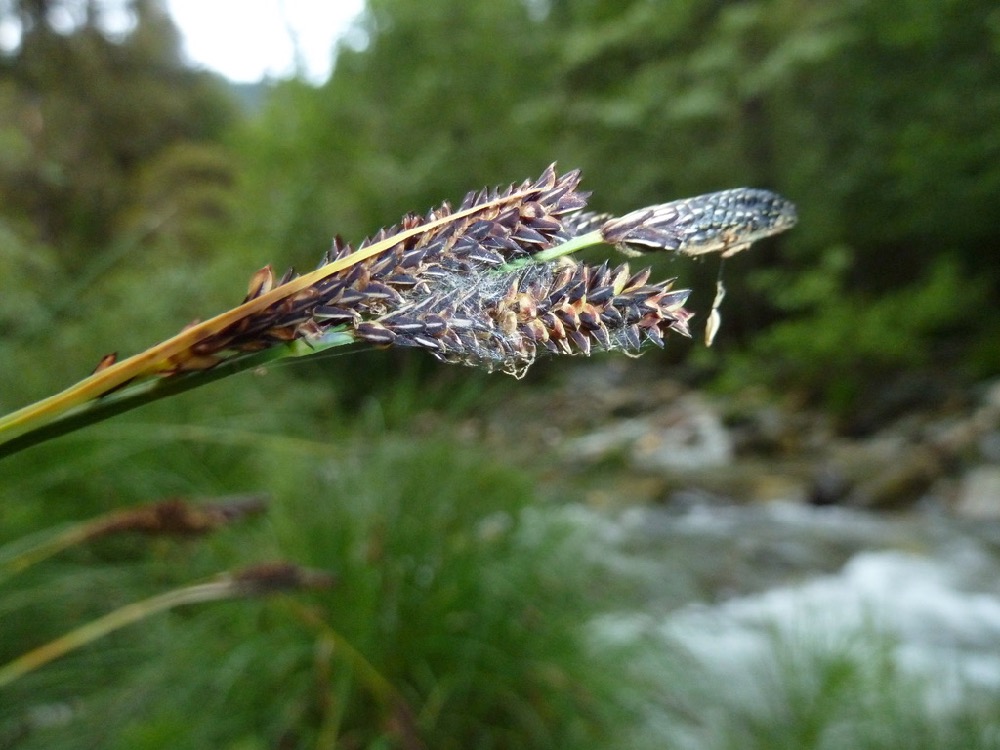
Torrent sedge grows along rocky or sandy stream banks, below the high water mark, of creeks and rivers in Oregon, California, and southern Washington. It is a very tough plant that can tolerate the ‘torrent’ of water during high water and floods. It tolerates being submerged under water for part of the winter. It has a gorgeous fountain of green foliage that grows on raised, dense clumps that are approximately 1-2 feet tall and up to 2 feet wide. It is winter deciduous, dying back in the winter. Torrent sedge is a member of the Cyperaceae plant family. It can tolerate a wide variety of soils and habitats, as long as plenty of water is available.
We always look forward to finding gummy gooseberries in late summer! We squeeze the pulp from the half-inch, reddish-brown to purple fruit into our mouths, discarding the sticky, “gummy” skin. It’s always a treat! Gummy gooseberry is a deciduous, spreading shrub that not only has edible fruit, it also has amazing red to magenta flowers that give rise to its additional common name, fuchsia-flowered gooseberry, because the pendant, solitary flower is reminiscent of a fuchsia flower.
Time flies when you’re having fun with the flora of the Klamath-Siskiyou region!
What a journey! 10 years ago we officially started Klamath-Siskiyou Native Seeds (KSNS)! We’ve been connecting you to native seeds and native plants for a decade now, and we look forward to many more years to come!
At Klamath-Siskiyou Native Seeds, we have been collecting native seeds for habitat restoration, nursery production, native plant gardens and more for nearly 25 years for various non-profits, businesses, and for the management of our own land; however, we didn’t officially start Klamath-Siskiyou Native Seeds until July 2015, which has allowed us to broaden the availability of native seeds to the general public for a decade now.
Thanks for being part of our journey! Without you, our valued customers and fellow native plant enthusiasts, we wouldn’t have made it to this milestone. We have pushed through some difficult, yet formative times, and those growing pains continue, as we keep growing! Every year we sell more and more native seeds!
We want to thank you for being part of this journey with us. In gratitude, for the first ten days of July, we will provide a discount on native seed packets. 10% off for 10 days for our 10th anniversary!
The native seed sale extends from July 1 – July 10.
Photos of what we’ve been up to lately are below. Seed collection season is in full swing!
Top left: Luke collecting squirreltail grass. Top right: Suzie collecting deltoid balsamroot seeds. Bottom: Suzie collecting Siskiyou lewisia seeds.
Collecting fragrant sumac (Rhus aromatica) seeds in the Klamath River canyon in June. The tangy and tart, edible, uncleaned fruit on the top left, and the seeds cleaned down on the top right.
Oso berry (Oemleria cerasiformis) fruit on the left, and cleaned seeds on the right.
KSNS IN THE NEWS
The Oregonian newspaper recently published a great article about Mark Newberger’s award-winning native plant butterfly garden near Mt. Ashland, outside Ashland, Oregon. “How an Oregon garden is saving butterflies and creating a wildlife ‘land bridge’ at 5,500 feet.” Designed by KSNS, with KSNS native seeds that were collected in nearby areas, this nature-scaped butterfly garden won the GARDEN OF THE YEAR award from the North American Butterfly Association, and is providing valuable habitat connectivity on privately conserved land on the Siskiyou Crest.
We have just added a couple new species to our ever-growing inventory: serviceberry (Amelanchier alnifolia) and western waterleaf (Hydrophyllum occidentale). Serviceberry is a well-known and familiar species, however, western waterleaf is not as well known, but is well-deserving to be in your native plant portfolio. Below are descriptions of these species, with links to purchase seed packets.
Serviceberry
This showy shrub or small tree goes by many different common names, including: Pacific serviceberry, western serviceberry, saskatoon, saskatoon berry, saskatoon serviceberry, western shadbush, western juneberry, and more. No matter what name you call it, this is a must-have species throughout its natural range, for native plant gardens, habitat restoration projects, hedges, wildlife plantings, pollinator gardens and more. Native to North America, serviceberry grows in Alaska, across most of western Canada, and in the western and north-central United States. In the Klamath-Siskiyou region it can be found growing along riparian areas and moist locations on the valley floor, and as you go up in elevation it can be found in dry chaparral, oak or madrone woodlands, in the understory of mixed conifer forests, along rocky and sunny ridgelines, and in open areas at high elevations. It is an adaptable species that can grow from sea level up to mountaintops.
Serviceberry can put on quite the show in early summer when it is adorned with fragrant, 1″ wide white flowers with five petals that look similar to the flowers on an apple tree, and serviceberry is in the same plant family as apples, the rose (Roseaceae) plant family. Serviceberry flowers in late spring to early summer, depending on elevation.
Serviceberry is an easy going, easy-to-grow species as long as it is protected from deer browse. It can grow in a wide variety of soil types and is fairly drought resistant once established, but it may need some supplemental water off of riparian areas in inland valley habitats. Likewise, at lower elevations it may grow better with some shade to part shade, and at mid to high elevations it will enjoy full sun. With enough water at lower elevations, however, it will grow well in full sun, and more sun does produce more fruit.
Pollinators will enjoy the showy serviceberry flowers as much as you do! They are a pollinator powerhouse, with many species of bees, butterflies, moths, wasps, beetles, and pollinating flies visiting the flowers for pollen and nectar. Serviceberry are also larval host plants for the pale tiger swallowtail, two-tailed swallowtail, western tiger swallowtail, and other butterflies and moths.
In summer those who grow serviceberries are rewarded with edible, nutritious, blueberry-like fruit, which is technically a pome, that many consider to be quite tasty, to downright delicious, depending on the plant and growing conditions. The purple “berries” are eaten fresh, dried, or made into a wide variety of jams, pies, wine, preserves, pemmican, and more. The berries are also an important food source for many different species of birds and animals.
Depending on elevation and soil conditions, serviceberry will grow between 5-30′ tall and 5-10′ wide. It typically has a rounded form, but it can grow more upright, especially in shady areas; however, it can be pruned as needed for shaping or height control, and it benefits from occasional pruning. It resprouts easily after being top-killed in wildfire. It does sucker, but it doesn’t spread vigorously.
Serviceberry leaves are green, elliptic to round shaped, with toothed/serrate leaf margins. It can have lovely yellow and golden fall color, and is a deciduous shrub, so it goes dormant in the winter after losing its leaves.
Unfortunately, serviceberry, for all its lovely attributes, is susceptible to cedar-apple rust, which is transmitted by fungus spores from nearby cedar or junipers trees. This fungal “rust” causes bright orange spots on the plant, which can sometimes cover the fruit and make it inedible. The best way to prevent cedar-apple rust is to avoid planting serviceberries near cedar or juniper trees, if you can. It generally is just a cosmetic issue, and it doesn’t typically kill the plant, but it is a bummer if the fruit crop is ruined by the rust every year.
Serviceberry (Amelanchier alnifolia) seed packets contain approximately 50 seeds per packet.
Serviceberry Seed Germination Instructions
Serviceberry seeds require 90-120 days cold-moist stratification in order to germinate.
Sow seeds in pots or direct sow outside in fall with a light dusting of soil over the seeds and let nature do the stratification naturally outside if you have cold enough winters. If you live in an area with mild winters, you may need to provide the cold-moist stratification artificially. For more information please read through the information in our Seed Germination and Propagation Reference Guide.
Western waterleaf
Western waterleaf is a beloved wildflower of the American West with a range that extends from California, to Oregon, Washington, Idaho, Utah, and Arizona. It is a perennial wildflower in the waterleaf (Hydrophyllaceae) plant family that has a subtle beauty. Growing from a slowly spreading rhizome, western waterleaf has long, compound green leaves with lobed leaflets. The dense flower clusters (cymes) rise above the leaves on an erect stem and are comprised of white to lavender, bell-shaped individual flowers that are up to a centimeter wide. The flowers have five petals, a split style and five purple stamens that protrude beyond the petals. In flower, western waterleaf will grow 1-2′ tall. Bloom time varies depending on elevation, but generally starts in April at lower elevations, and continues into July at higher elevations. The stems will lower as the flowers fade and produce spherical capsules that contain two brown seeds. Western waterleaf’s reproduction is primarily sexual, through seeds, but they can also propagate vegetatively through rhizomes.
Hydrophyllum is a genus of herbaceous perennial plants in the Hydrophyllaceae plant family. There are ten species of Hydrophyllum, and they are all native to North America. The generic epithet Hydrophyllum (Hydro = water and phyllum = leaf) in Greek means “waterleaf,” which has remained the common name for the species in this genus, including western waterleaf. Most of the species in this genus are found in areas of mesic or moist soil, and the same is predominantly true for western waterleaf as well, although it may have more drought tolerance than some of the other species in this genus. It is also thought that the name can also come from the pale spotting that sometimes occurs on the leaves, that are reminiscent of water drops.
Western waterleaf grows in a variety of habitats from low to high elevations, including moist pockets in oak woodlands, chaparral slopes, mixed conifer forests, pine forest, mountain meadows, streambanks, and it can tolerate serpentine soils. It is most often found in shaded or partly shaded areas, but it can grow in full sun, and will explode with abundant growth and flowers following wildfire.
This species is very attractive to a wide variety of pollinators.
Mark’s native plant butterfly garden is located on the Siskiyou Crest, above Ashland, Oregon on the ridgeline that divides the Klamath River watershed from the Rogue River watershed, with both Mt. Shasta and Mt. McLoughlin in view from the garden. The Siskiyou Crest is the only east-west tending transverse mountain range in the Pacific Northwest and is renowned for its botanical diversity and exceptional habitat connectivity.
Sixty different species of butterflies have been documented on Mark’s property by local butterfly experts Dianne Keller and David Lee Myers.
Instead of disrupting the habitat connectivity on the Siskiyou Crest, as private lands within natural settings have the potential to do, Mark’s native plant butterfly garden blends seamlessly into the surrounding ecosystem, with naturescaping that enhances the habitat value of his property for pollinators and other wildlife, keeping the habitat connectivity of the Siskiyou Crest intact in that area.
“This native plant and butterfly garden has truly exceeded my expectations and gives me joy every day.”
Mark Newberger 2024 recipient of Lana Edwards Butterfly Garden of the Year
Here at Klamath-Siskiyou Native Seeds, we are happy to share the joy of this award with Mark, as the seeds used to create this fabulously naturescaped butterfly garden were sourced from Klamath-Siskiyou Native Seeds.
In 2016 Klamath-Siskiyou Native Seeds collected seven pounds of native seed under contract for Mark’s native seeding project. The site had recently been disturbed during hardscaping upgrades, creating the perfect opportunity to seed natives. All of the seed was hand collected in the Siskiyou Mountains, with a good portion collected right on the property in areas where intact habitat and abundant seed was available.
Native wildflowers seeded along the PCT that runs through Mark’s property.Butterfly workshop in the native plant gardensPhoto taken on the day Suzie was hosting a workshop with Pollinator Project Rogue Valley at Mark’s native plant gardens.
In the fall of 2016, seed from 58 species of native wildflowers and grasses were sown. Eight years have passed since the project began, resulting in a vibrant and showy display of native wildflowers, and a drastic increase in pollinator species diversity. Over eight years regular weeding and light watering has aided the seedling establishment and helped keep the area primarily native plants.
KSNS created this video in 2020 to document the success of the project and highlight how naturescaping with native plants can bring not only beauty to your property, but also an increase in native species diversity that provides important habitat for pollinators and wildlife, including abundant butterflies!
Klamath-Siskiyou Native Seeds: Siskiyou Mountain Native Seeding Project, video from 2020
Arrowleaf buckwheat in Mark’s native plant butterfly garden.
Thanks to Mark Newberger for having the vision to create such an amazing native plant garden, for having the patience to let the garden grow from seed, and for being such a good steward of the project to help keep the garden looking so good!
Mark’s property has 166 documented species of vascular plants overall, from annuals and perennials, to trees and shrubs. Click here to see the list of 63 species that currently grow in the native seeding project area of Mark’s garden that KSNS has collected seeds for.
Buckwheat Bonanza!
Buckwheat seed packets 25% off now!
In honor of Mark Newberger’s Lana Edwards Butterfly Garden of the Year Award, we want to help others create what Mark has created. Mark really loves wild buckwheats, in the genus Eriogonum. So for the next week (January 20-27, 2025), KSNS is giving a discount of 25% off all our buckwheat seed packets that are currently in stock: arrowleaf buckwheat, sulphur flower buckwheat, and tall woolly buckwheat. Learn more about growing wild buckwheat from seed here.