


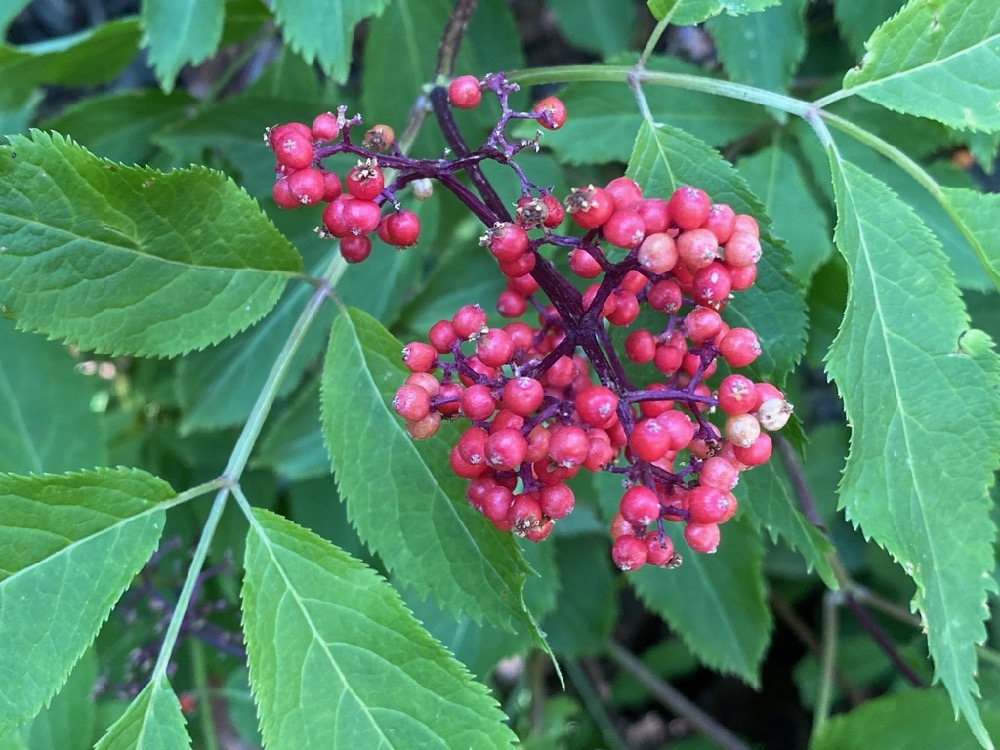


Description
Red elderberry is known for it’s knockout, flashy red berries in late summer to early fall. It is an eye-catching shrub that has long been grown as an ornamental plant in native plant and wildlife gardens. Although the red berries steal the show, the white to cream colored flowers are fragrant and highly attractive to various pollinators, including hoverflies, hummingbirds and butterflies. The red berries are eaten by birds and other wildlife.
One of only two native elderberries in this region, red elderberry is a close relative of blue elderberry, a species that is very well known because of its useful blue fruit that is made into wine, preserves, cough syrup, and more. Red elderberry is less well known and its fruit is not edible when raw. The raw fruit is considered poisonous, particularly because of the seeds, because they can cause gastrointestinal discomfort, but the seeds can be strained and the fruit can be cooked, or properly prepared for consumption. Red elderberry is used medicinally.
Red elderberry is native to Europe, northern temperate Asia, and North America across Canada and the United States. Although it is not super abundant in the Klamath-Siskiyou Mountains, it can be found growing in riparian areas, thickets woodlands, meadows, forest openings and other habitats, generally in moist areas. Red elderberry is a tall, deciduous shrub that generally grows 5-12 ft. tall or more. The stems have a soft, pithy center, and the green compound leaves have a handsome serrated edge. This species is suckering and will spread, so grow in a location where it has plenty of room to grow.
Red elderberry is great for a hedge in full sun to part-shade with medium to wet soil moisture. It prefers deep, loamy and nutrient rich soil with good drainage.
Red elderberry (Sambucus racemosa) seed packets contain 75 seeds per packet.
Seed Germination Instructions
Seeds will germinate best with 30-60 days warm-moist (70-85°F) stratification followed by at least 90-120 days cold-moist stratification (33-40°F). Sow seeds with a light layer of soil outside in early fall and let nature do the stratification naturally outside, if you have cold enough winters. If you live in an area with mild winters, you may need to provide the cold-moist stratification artificially. For more information please read through the information in our Seed Germination and Propagation Reference Guide.


