Description
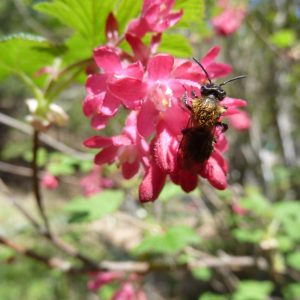
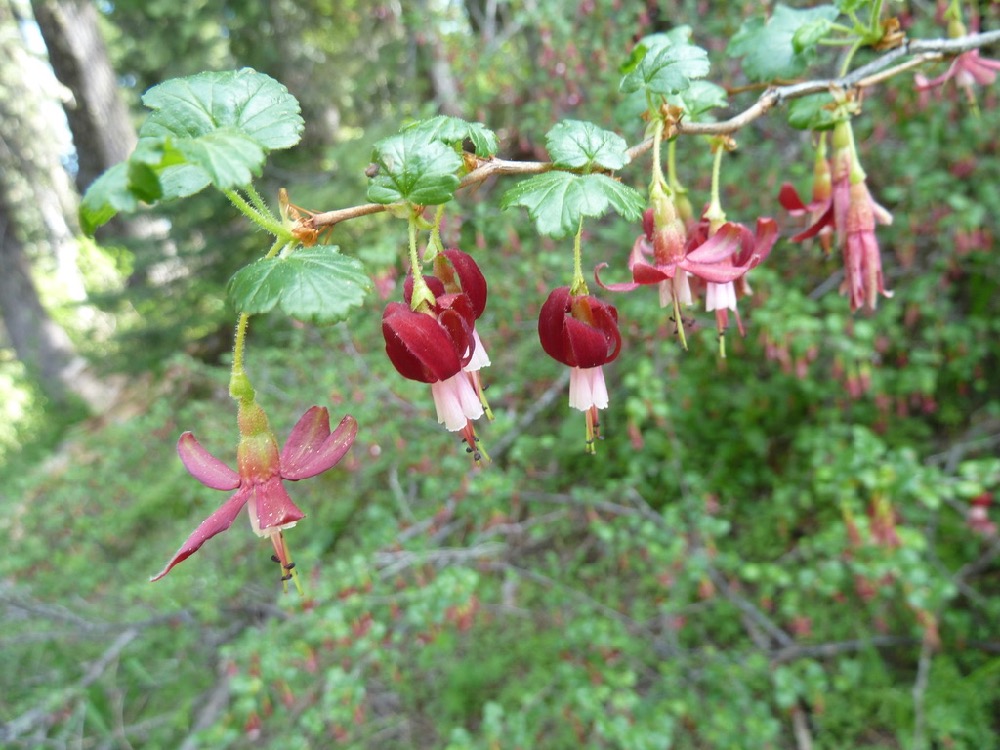
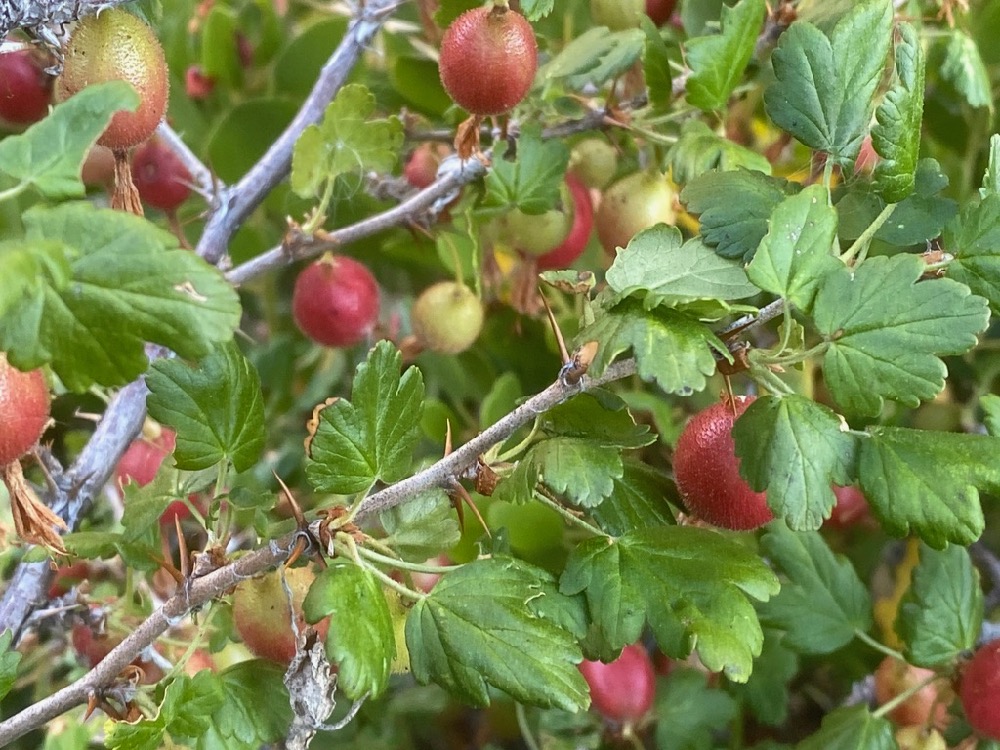
We always look forward to finding gummy gooseberries in late summer! We squeeze the pulp from the half-inch, reddish-brown to purple fruit into our mouths, discarding the sticky, “gummy” skin. It’s always a treat! Gummy gooseberry is a deciduous, spreading shrub that not only has edible fruit, it also has amazing red to magenta flowers that give rise to its additional common name, fuchsia-flowered gooseberry, because the pendant, solitary flower is reminiscent of a fuchsia flower. The flowers bloom April to June, depending on elevation. It is also sometimes called Lobb’s or Lobb Gooseberry, Gummy Currant, Pioneer Gooseberry, or Oregon Gooseberry. The fact that this species has a lot of different common names, to us, means it is a much-loved species.
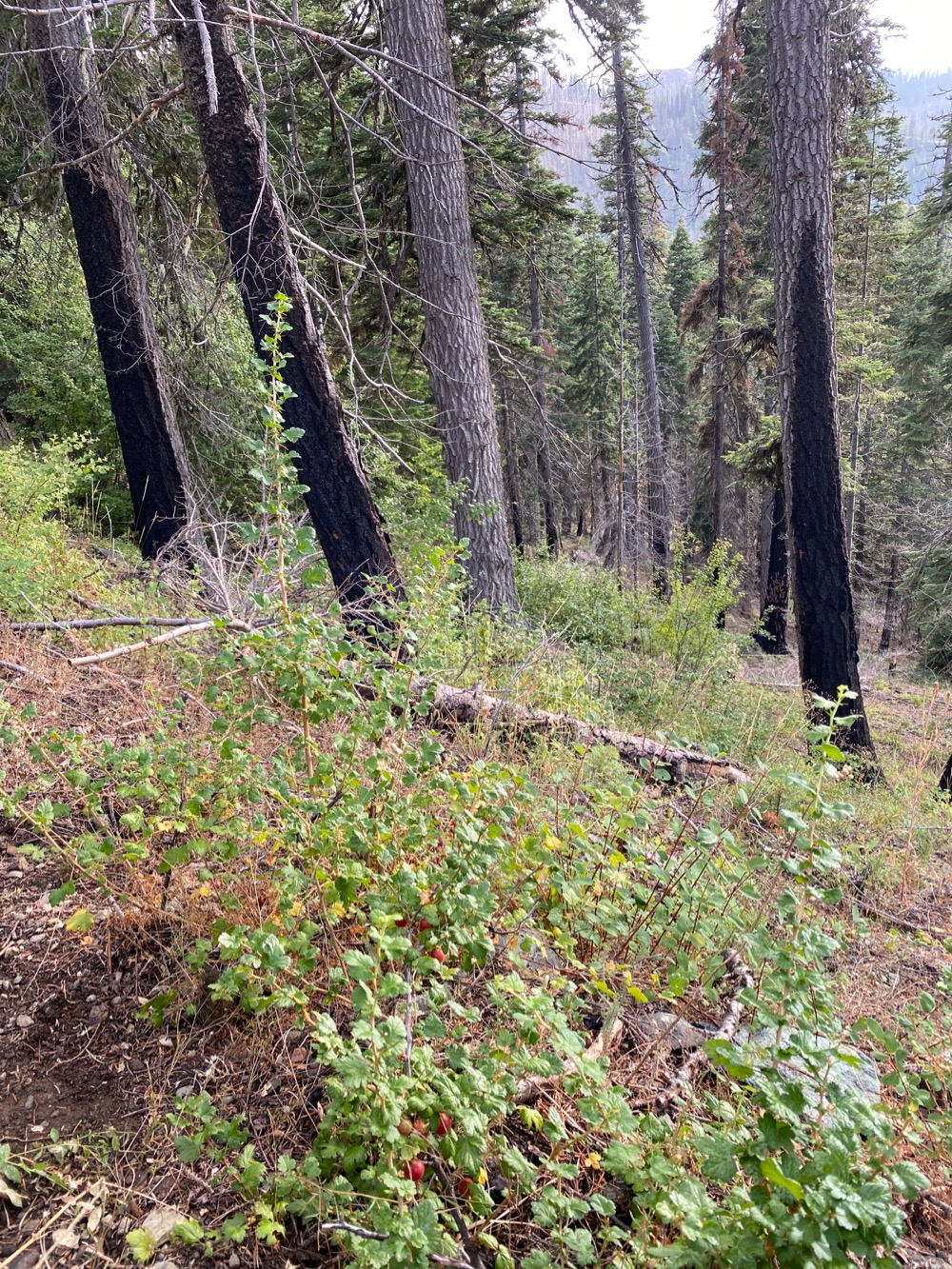
Gummy gooseberry is found in montane and subalpine forests, from nearly sea level up to 8,000′ in elevation, in California, Oregon, Washington and British Columbia, mostly west of the Cascade Mountains. It is found growing in open woodlands, in forest understories, along streams and water sources, in lowland valleys, rock outcrops and mountain slopes. This fire-adapted species responds well to and puts on more flowers and fruit following wildfire.
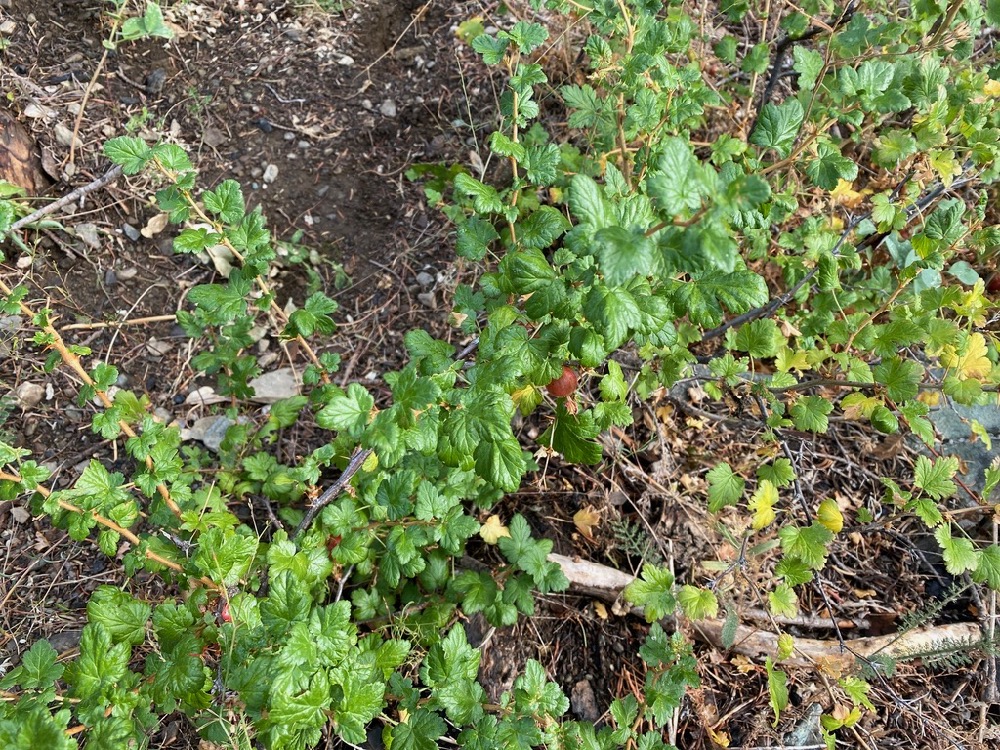
It generally grows 1.5-3 feet tall, and the stems often have three slender nodal spines, but sometimes they are absent. Like the sticky, “gummy” fruit, the green leaves can also be glandular-sticky.
Gummy gooseberry is a perfect species for an edible native plant garden, rock garden, pollinator garden, or just for ornamental use. If grown at low elevations in drier regions it will need supplemental summer irrigation, but if grown at higher elevations or closer to the coast it may not need much supplemental summer irrigation. It will grow best in well-drained soil with medium moisture.
The flowers are attractive to hummingbirds, bees, butterflies and other pollinators. Ribes, in general, are larval host plants for many butterfly and moth species.
Plant parts of gummy gooseberry, especially the roots, have long been used in medicinal preparations for various ailments and conditions. The species has a long history of being used for other cultural uses as well, including cordage.
The specific epithet, lobbii, was a dedication to the English plant collector William Lobb. The plant was first described to science in 1876 by Asa Gray.
Gummy gooseberry (Ribes lobbii) seed packets contain approximately 70 seeds per packet.
Seed Germination Instructions
Seeds need up to 90-120 days of cold-moist stratification. Sow seeds with a light layer of soil outside in fall to early winter and let nature do the stratification naturally outside, if you have cold enough winters. If you live in an area with mild winters, you may need to provide the cold-moist stratification artificially. For more information please read through the information in our Seed Germination and Propagation Reference Guide.