Description
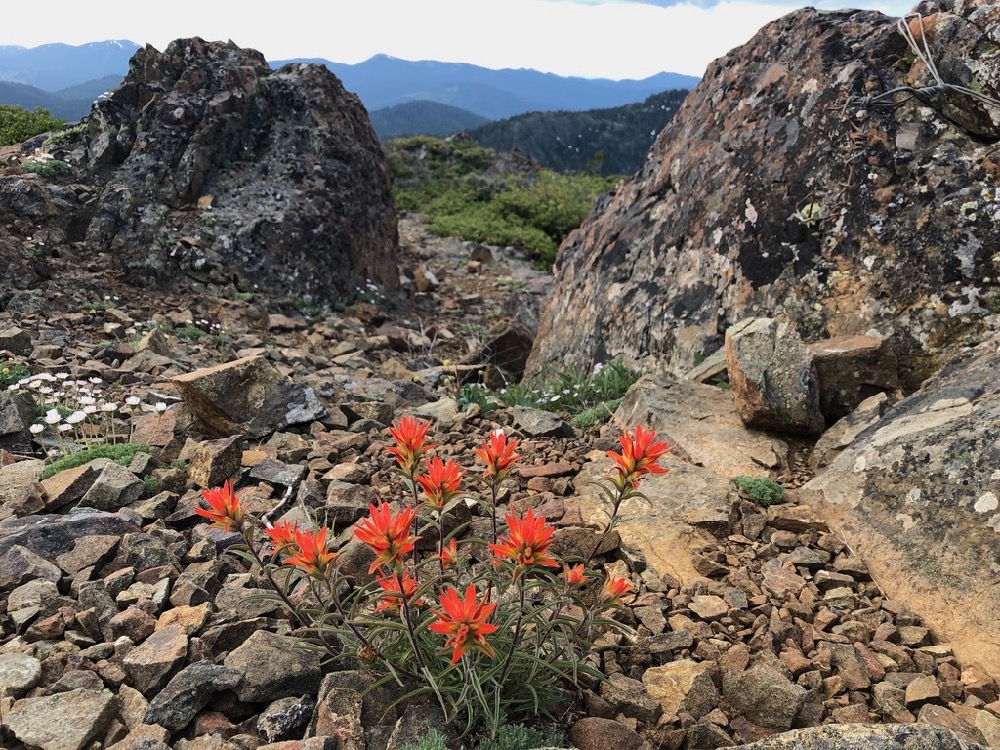
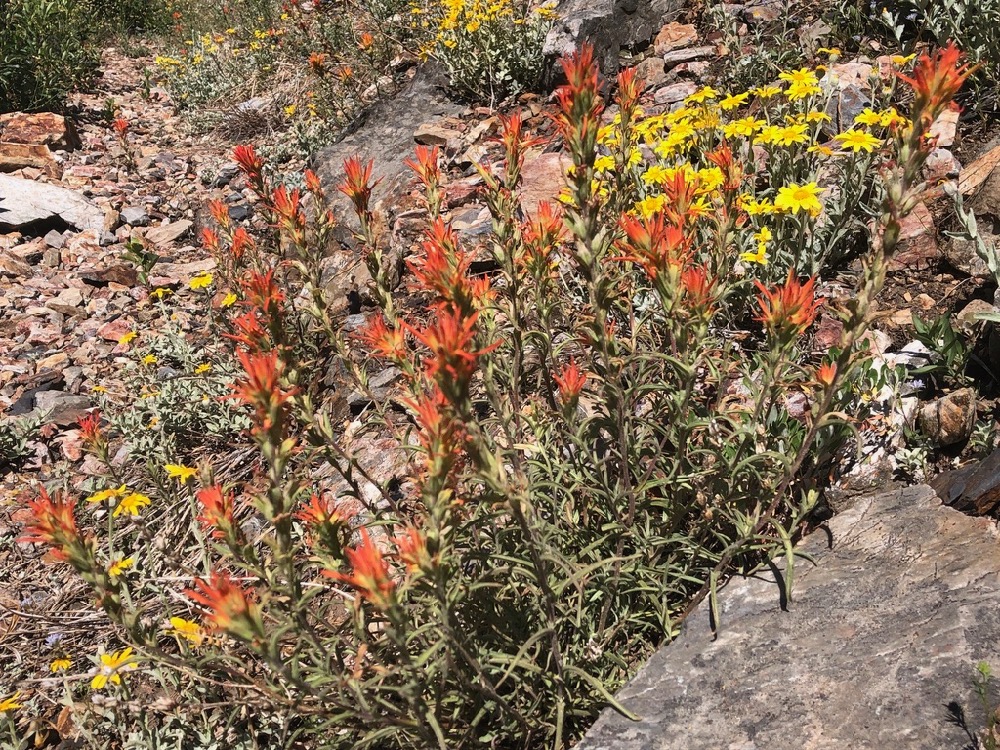
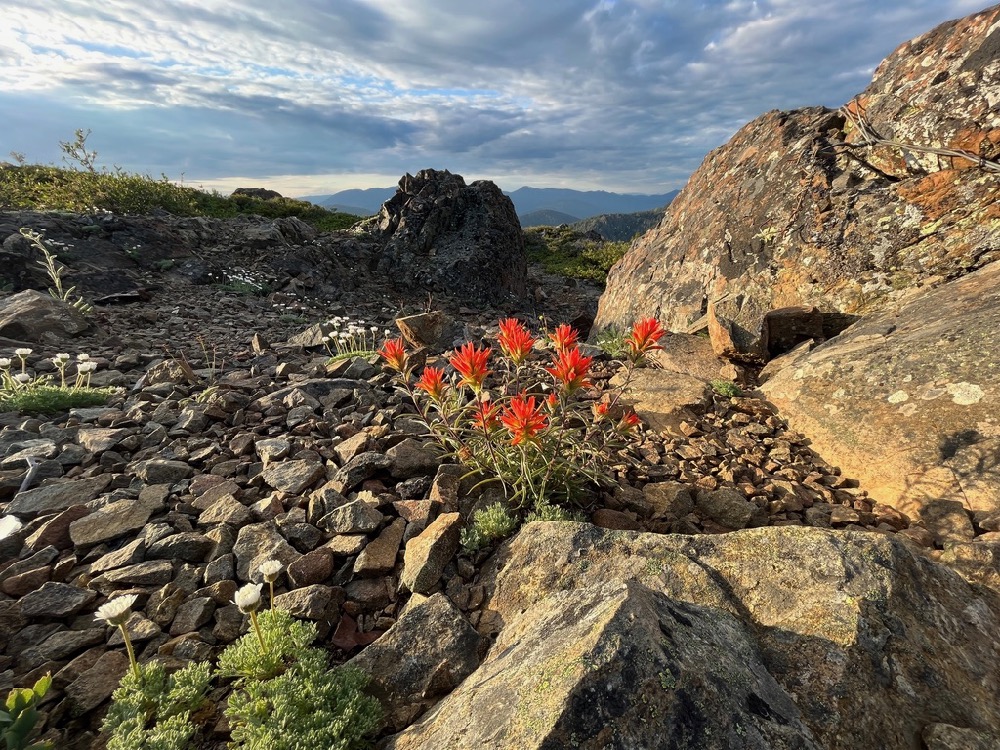
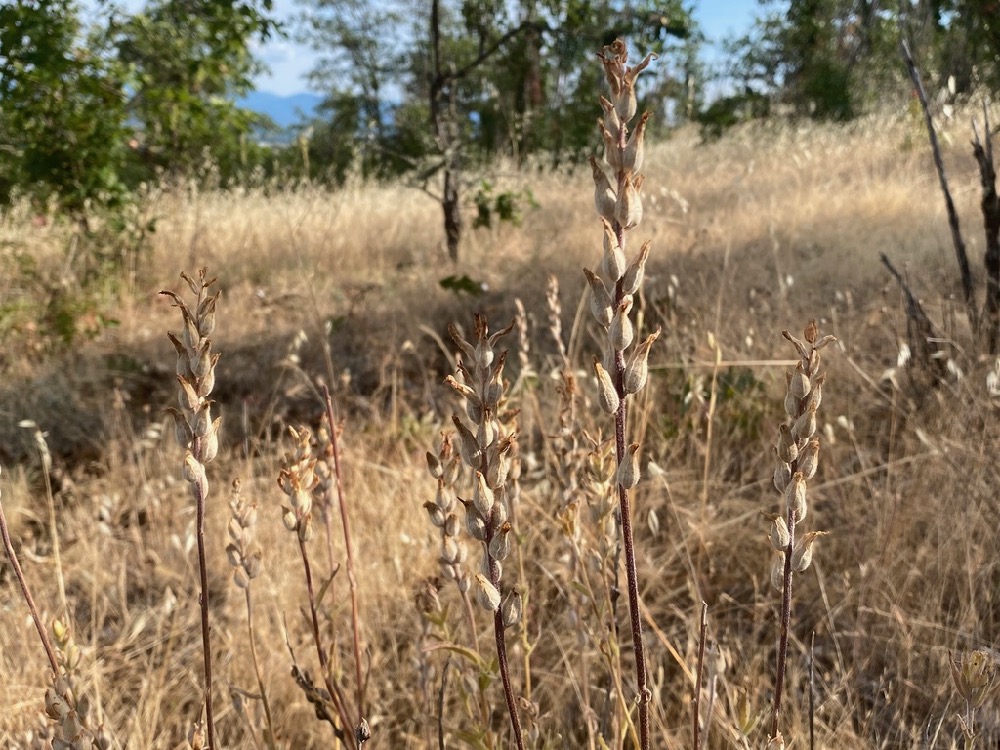
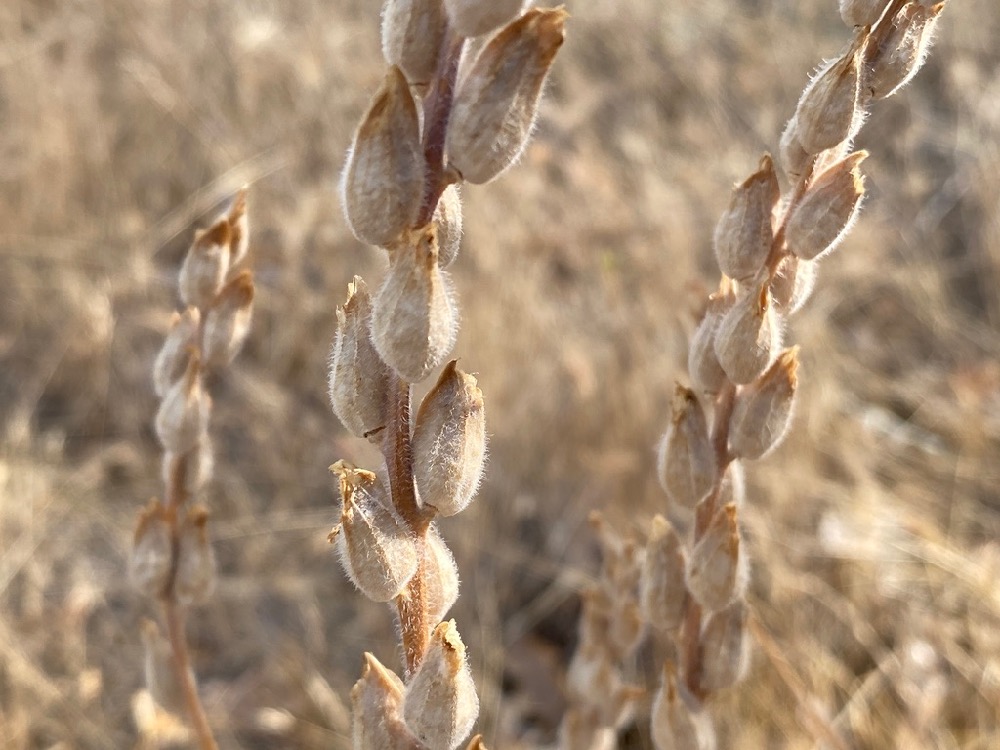
The flashy red to orange-red bracts of frosted paintbrush pop out and catch the eye. These attention grabbers make an impression in wildland landscapes as well as backyard gardens. Native to California and Oregon, the stems and lower leaves of frosted paintbrush are densely covered with branched hairs, giving the plant a gray-green frosted appearance, hence the common name of this well-loved perennial wildflower species. Frosted paintbrush blooms in spring to early summer depending on elevation. It grows from a woody caudex and a taproot. It can be found growing in dry, open, rocky areas, forest edges, woodlands or chaparral habitat on various soil types, including serpentine soils. It grows 1-3′ tall and is a member of the Orobanchaceae (broomrape) plant family.
Adult butterflies, hummingbirds, native bees, beetles and moths frequently visit the tubular flowers hidden inside the colorful red bracts for nectar. The brightly colored bracts of frosted paintbrush stand out clearly to hummingbirds, which rely heavily on color rather than scent for flower detection. Many species butterfly and moth larvae use plants in the Castilleja genus as larval host plants.
Like other species of Castilleja, frosted paintbrush is hemiparasitic, feeding off the roots of a host plant, where it gets some of its nutrients. It will only grow and thrive with a host plant. Host plants vary by site, but native grasses, forbs and shrubs are generally host plants. We have had success growing frosted paintbrush alongside Roemer’s fescue (Festuca roemeri).
Tara Luna wrote, in “Propagation Protocol for Indian Paintbrush Castilleja species” (Native Plants Journal, Volume 6, Number 1, Spring 2005, pp. 62-68):
“Unlike a true parasitic plant, hemi-parasites are capable of manufacturing their own food and obtaining water and nutrients from soil, but they also form specialized roots known as haustoria roots that attach to the roots of a host plant, thereby providing additional water uptake for the paintbrush plant and possibly some organic and inorganic nutrients. The relationship does not kill the host. Seeds do not require a signal from the host to initiate germination, and they contain endosperm that provides enough energy for the seedling to establish independently. Unless a haustorium root becomes attached to a host root, however, they will decline in vigor, remain stunted in growth, and never flower, or they will eventually die. The degree that a species can grow and develop without the host may vary widely between species.”
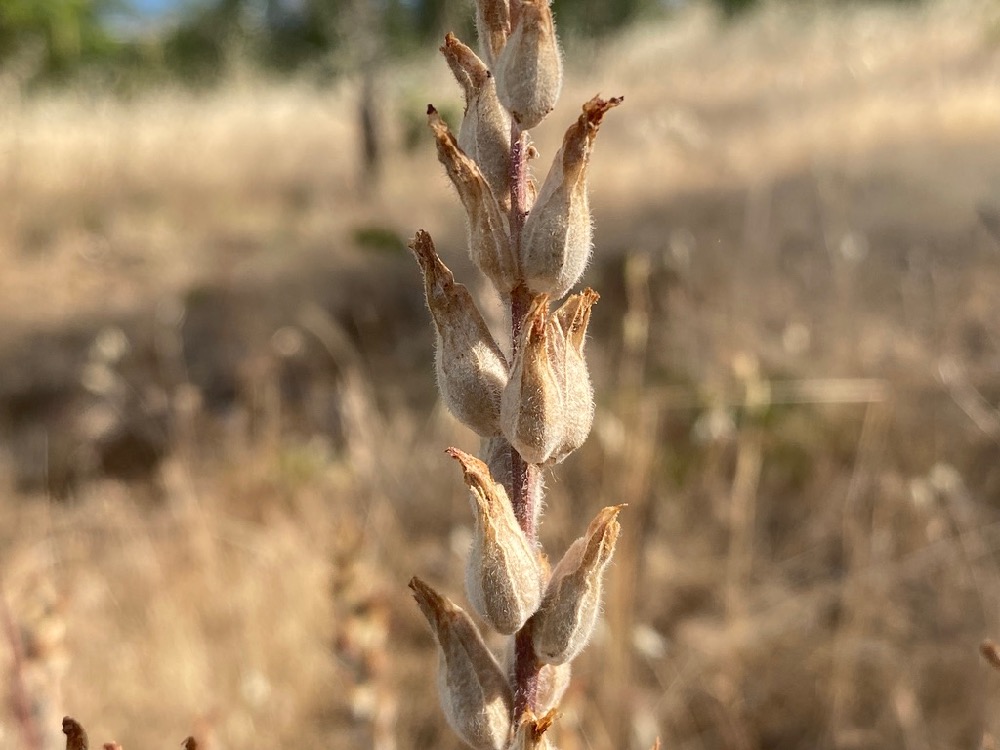
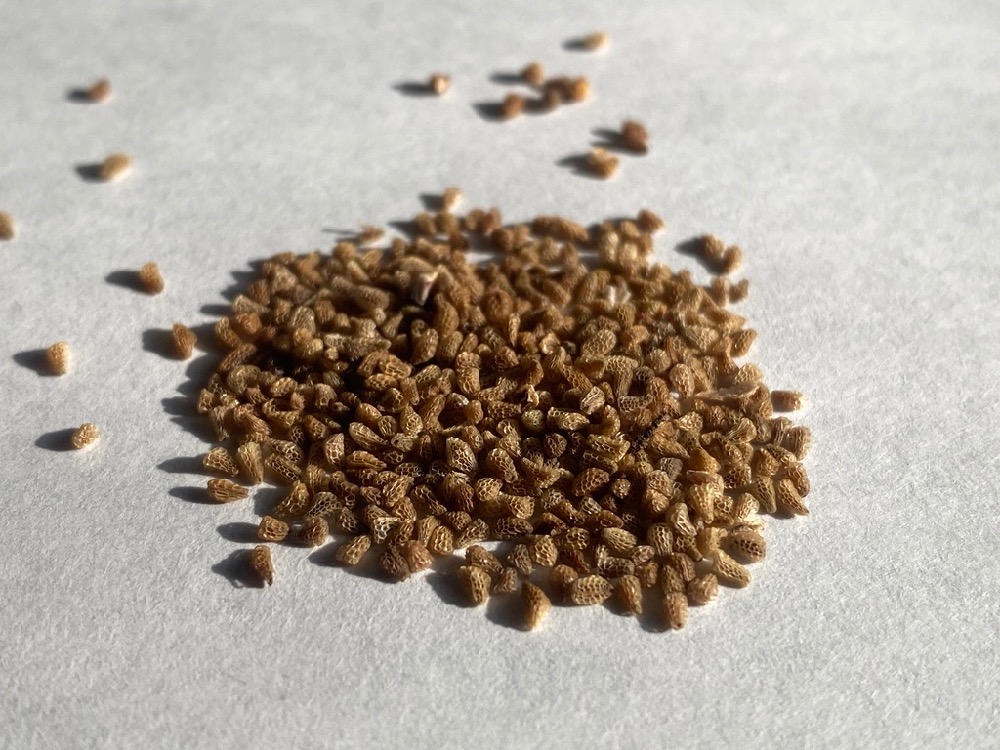
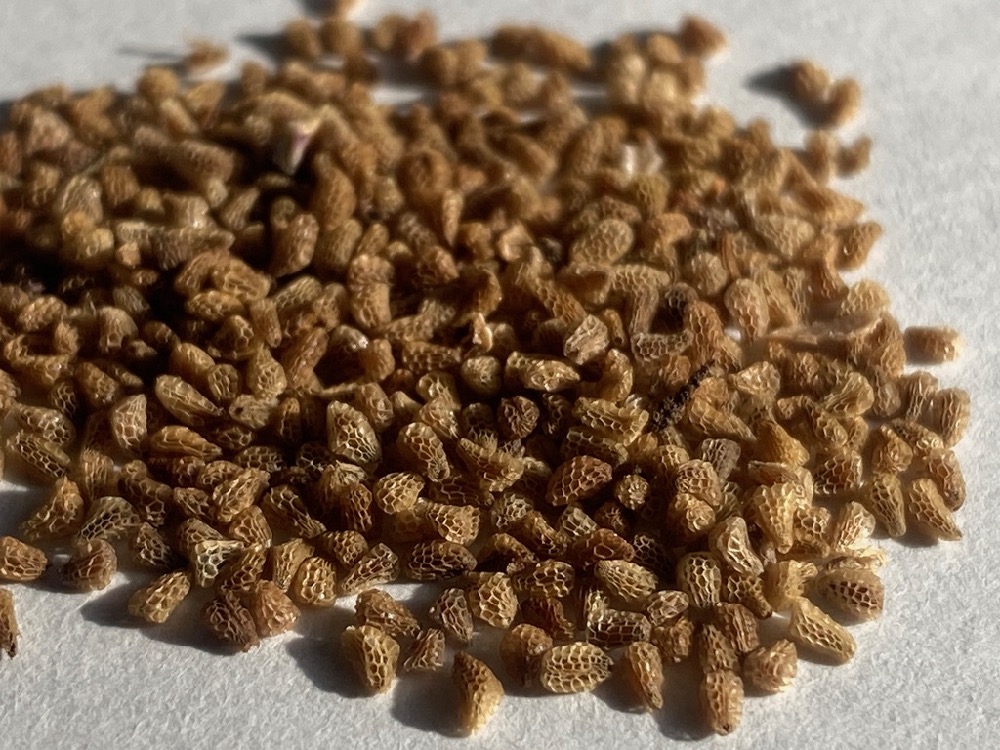
Frosted paintbrush (Castilleja pruinosa) seed packets contain approximately 130 seeds per packet.
Seed Germination Instructions
90 days cold-moist stratification. Sow seeds in pots (with host species) or direct sow outside (next to host species) in fall with a light dusting of soil over the seeds and let nature do the stratification naturally outside, if you have cold enough winters. For more information please read through the information in our Seed Germination and Propagation Reference Guide.


