Give the gift of native seeds this holiday season!
Are you looking for a unique, eco-friendly holiday gift for a nature-lover you know? Klamath-Siskiyou Native Seeds offers Gift Certificates that are available in any amount. Or you can purchase native seed packets to package and gift directly yourself.
Native seeds given as holiday gifts can be planted right away in order to achieve cold-moist stratification over the winter for springtime seed germination!
To order a gift certificate just send us an email at klamathsiskiyou@gmail.com
Native plant seeds are used for various applications. Many people use native seeds for growing plants for landscaping and native plant gardens, while others who own or manage land will use native seeds for habitat restoration projects. If you own or manage land you may have a goal of increasing native plant composition and diversity — using native seeds is a great way to achieve that goal! Seed germination is greatly improved if seeds have direct contact with the soil and there is limited competition from non-native plants and heavy thatch, so site preparation is one of the most important aspects of a successful native seed project. Site preparation can be achieved through various techniques, including solarization, tilling, herbicide use, or fire.
Solarization, using clear greenhouse or black plastic to heat the soil and kill existing vegetation and non-native seeds in the soil seedbank, is a good choice for small areas but can be difficult to pull off on a large scale. It is a non-toxic method and is worth trying if other other site prep techniques are not possible.
Tilling can work under certain situations but generally triggers germination of non-native plant seeds in the soil seedbank that thrive on soil disturbance. If tilling, try to only till the top 1″ of the soil to limit soil disturbance. The least amount of soil disturbance the better. Sometimes simply raking thatch back to the point where bare mineral soil is exposed can be all you need to sow native seeds and have successful seed germination.
Herbicide use is commonly used by restoration practitioners to kill off existing vegetation and replace it with native plants using native seeds. Although this method is effective, it is controversial for all the obvious reasons associated with herbicide use and we don’t use this method ourselves.
Fall 2018
Fall 2018
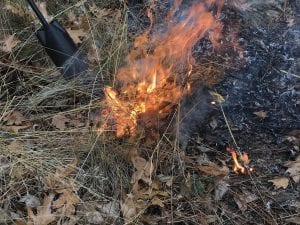
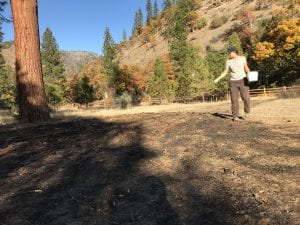
The site preparation technique we will feature is using fire to prepare a site for native seeds. The Klamath-Siskiyou region is a fire-adapted ecosystem where over millennia plant seeds have evolved to germinate profusely following a fire in order to recolonize the site. Fire naturally prepares a site by eliminating thatch and creating a mineral-rich seed bed of ash and bare soil, perfect conditions for seed germination.
Although federal land managers and large land conservancies do seeding projects following large prescribed fire projects, private landowners can create the same effects on a very small scale using simple techniques. If you have land that you have performed homesite defensible space work on and you have some burn piles to burn, turn those burn pile sites into small seed projects. After the burn pile has fully cooled down and is completely out you can sow the area with native seeds. Seeds are best sown in the fall in order to achieve cold-stratification requirements. A burn pile that was a small circle of ash and charcoal can turn into a profusion of native plants and wildflowers that will spread over time.
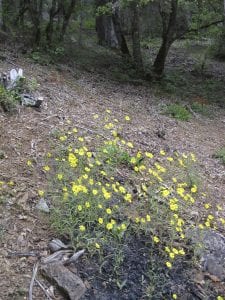
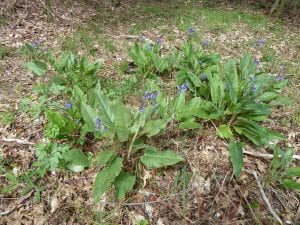
Native seedlings and plants growing from seed in burn pile sites.
Native plants growing from seed in a burn pile site
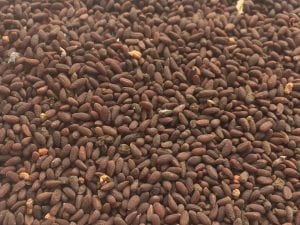
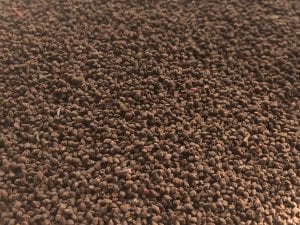
Here at Klamath-Siskiyou Native Seeds (KSNS) we spend a lot of time photographing flowers and plants during the growing season; however, this time of year, as plants go dormant and we clean and package seeds for sale, we focus on taking pictures of the seeds themselves in order to help people get to know native plants on a more intimate level. Getting to know the seeds of native plants helps deepen the understanding of a plant’s lifecycle, growing habit, and reproduction.
As you sow native plant seeds this fall and winter take the time to closely observe the structure of the seeds you are planting. Aren’t they amazing? The color, texture, smell, and shape of a seed is as fascinating as the plants that emerge from them. Below is a selection of photos we would like to share that features a wide variety of seeds from native plants of the Klamath-Siskiyou region. Enjoy!
Want to support bird populations in your yard or on your land? Plant native plants!
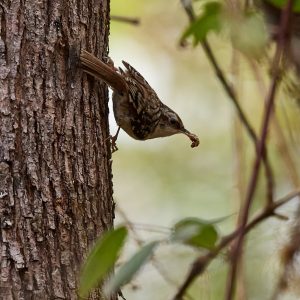
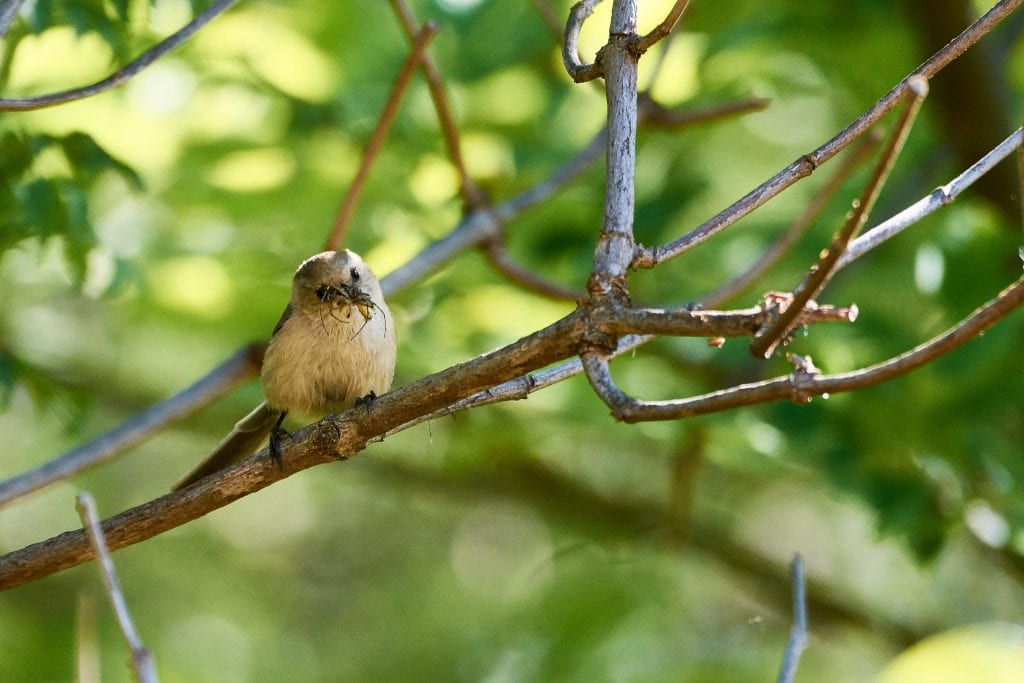
New research has shown that the prevalence of non-native landscape and garden plants reduces the population of insectivorous birds. Because most birds rely on insects for food for themselves and their young, and because many insects are unable to use non-native plants, birds are less prevalent in areas with high percentages of non-native plants.
The research has shown that the threshold for habitat is 70%. That is, if a yard contains at least 70% native plants it will provide enough insects for food for viable populations of birds.
Yellow warbler Photo: Frank Lospalluto
As humans alter landscapes and transform native plant communities into developments with non-native plant landscaping and gardens, there is less and less habitat for insects, and less and less habitat for birds and many other native species. Plant biodiversity is important for insects like pollinators, as well as for all wildlife, including birds that need native plants in order to sustain healthy populations. Even in areas where human infrastructure dominates, planting native plants is vital to support local food webs.
Although the newly published research has been done by researchers associated with the University of Delaware, the implications are far reaching and applicable to the western U.S. as well.
Although it seems counterintuitive, many native species have seed that germinates in the fall. Seeds respond to fall rain or dew set that moistens the soil and triggers fall germination. This strategy enables these species to overwinter as a small rosette of leaves, ready to bolt and flower as soon as the weather warms in the spring. These cool season species get a jump start on growth in the fall in order to be more established before blooming.
In order to help these species achieve fall germination the seeds must be sown outside around the time of the first fall rain. The warm fall soil temperatures and rain trigger seed germination. For some species it is important to have them sown before the first significant fall rain comes, as this enables the seed to have enough moisture to germinate before the temperatures turn really cold.
Klamath-Siskiyou Native Seeds offers seed for the following annual species of wildflowers with seed that can germinate in the fall.
Klamath-Siskiyou Native Seeds (KSNS) will have a booth at the Talent Harvest Festival on October 6th. We will have a variety of native seed packets for sale as well as many potted native plants grown from our locally wildcrafted native seeds. Since we don’t ship live plants this is a great opportunity to purchase plants for fall planting.
For many years KSNS has been the go-to source for retail native seeds in southern Oregon and northern California. Our motto, Grow Native-Grow Wild, says it all. We want to provide a wide diversity of native plant seeds from the wild to enhance botanical diversity and native plant conservation.
Can’t make the Talent Harvest Festival? Purchase local native seeds from throughout the Klamath-Siskiyou region through mailorder on our website. KSNS offers nearly 150 species of native seed! You won’t find this wide selection anywhere else in the region. Shop for native seeds now!
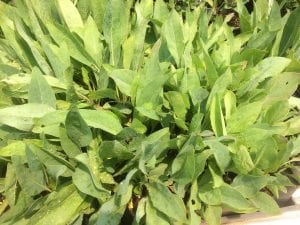
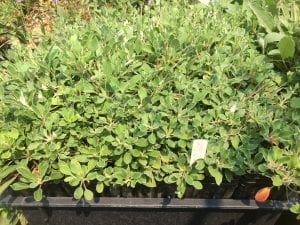
Coming to the Talent Harvest Festival? Check out the following list of selected potted native plants KSNS will have at our booth. Fall is the perfect time to plant native seeds and native potted plants. See you there!
The aster family of plants is a large, diverse plant family that includes species that range from common yarrow (Achillea millefolium) and Oregon sunshine (Eriophyllum lanatum), to narrowleaf mule’s ears (Wyethia angustifolia). However, when you hear the word aster, you generally think of purple fall-blooming asters that used to be classified in the genus Aster.
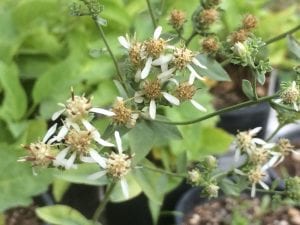
Leafybract aster (Symphyotrichum foliaceum) and pollinating wasp
Up until the 1990s the genus Aster contained 600 species in Eurasia and North America. After morphological and molecular research all but one plant within the genus Aster in North America was reclassified as other related genera. There are now only 180 plants within the genus Aster, mostly confined to Eurasia. North American asters are now in genera such as Dieteria, Eucephalus, Eurybia, Heterotheca, Oreostemma, Sericocarpus, Symphyotrichum, etc. Although the name of the genera have changed, most common names still include the name aster, for example, Leafybract aster is now Symphyotrichum foliaceum.
Native plants can be used in a wide variety of ways. Klamath-Siskiyou Native Seeds has provided native plant seeds for the following applications.
Native Plant Habitat Restoration
Whether our clients are looking for a small amount of seed for a small-scale native plant habitat restoration project, or many pounds of seed for a large-scale restoration project on their land or land they manage, Klamath-Siskiyou Native Seeds meets our clients’ needs. We have provided seed for many successful native seeding projects on private and public land.
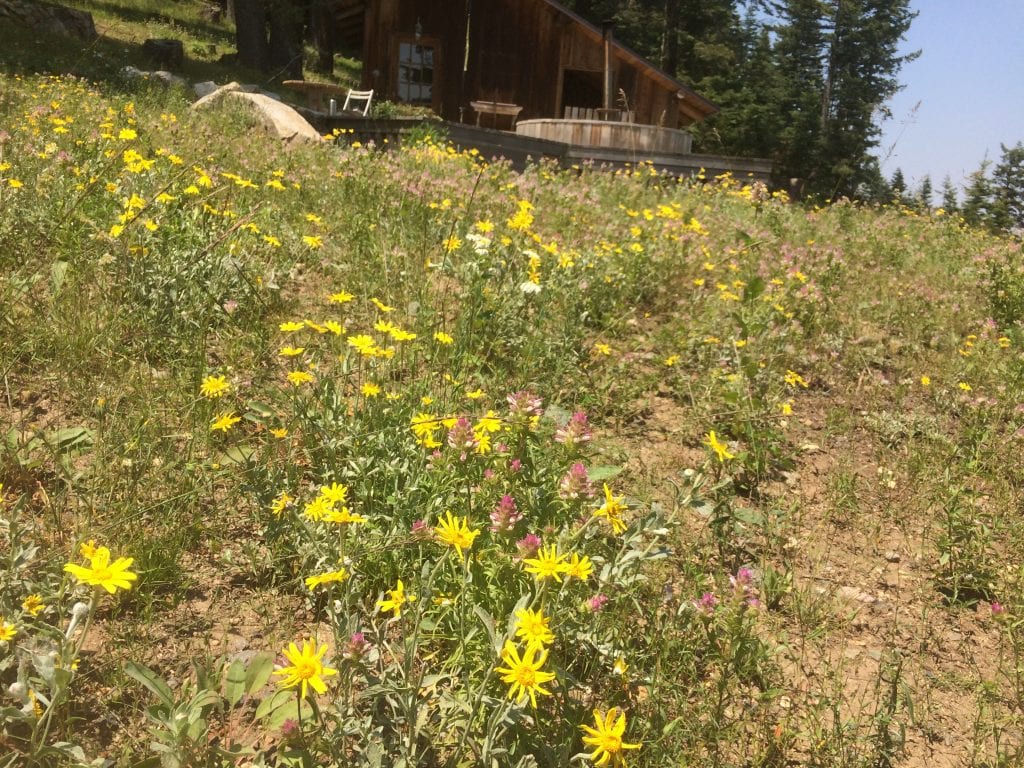
Wildflower meadow restoration near a home in the Siskiyou Mountains.
Native Plant Grow-out and Nursery Production
We provide native plant seed to many native plant nurseries on the West Coast, as well as for our own small nursery in the Applegate Valley of southern Oregon. Growing native plants for large-scale habitat restoration and smaller garden applications gives our clients and customers a jump start on plant growth for their planting projects.
Because of the world-class biodiversity of the Klamath-Siskiyou region and the wide variety of native plant species in the area, the timing of seed collection is also quite varied. In order to collect seeds from low elevations on up to high elevations, and early to late blooming species, our seed collection season generally starts in mid-May and ends in late October. We are currently at the height of the seed collection season.
This time of year we are out in the field many days a week collecting seeds — bear with us if we don’t return your email right away — and working hard to keep up with seed processing and cleaning on the days we aren’t in the field. We also have numerous habitat restoration projects and planting and design projects we are working on, plus growing native plants in our small native plant nursery. It’s a busy time of year!
Oregon sunshine (Eriophyllum lanatum) is a known as a “workhorse species.” It germinates well from seed, establishes easy in soil with good drainage, is deer resistant, drought tolerant, and is an amazingly attractive pollinator plant. Oregon sunshine is an important part of many native planting or seeding projects. It performs well as a component of wildflower seed mixes for habitat restoration, as part of a backyard wildflower meadow, in rock gardens, or as a showpiece ornamental plant. Oregon sunshine’s easy-going versatility makes it a good choice for many applications. It attracts native bees, beetles, pollinating flies, moths, and butterflies. It is also a larval host plant for various butterfly species.
Bring a little sunshine into your life by planting Oregon sunshine!